Cenote Sanctuary Baths, Tulum, Mexico

Inspired by the mystical cenotes of Tulum, Mexico, this bathhouse project reimagines the traditional thermal bath as a profound connection between architecture and geology. Carved directly into the earth, the design utilizes local limestone as both its foundational canvas and its primary aesthetic expression. This material continuity blurs the lines between the built environment and the natural topography, extending from the subterranean caves to the above-ground structures. The project proposes a sanctuary that honors the region's unique subterranean hydrology, offering visitors an immersive space for physical and spiritual renewal.
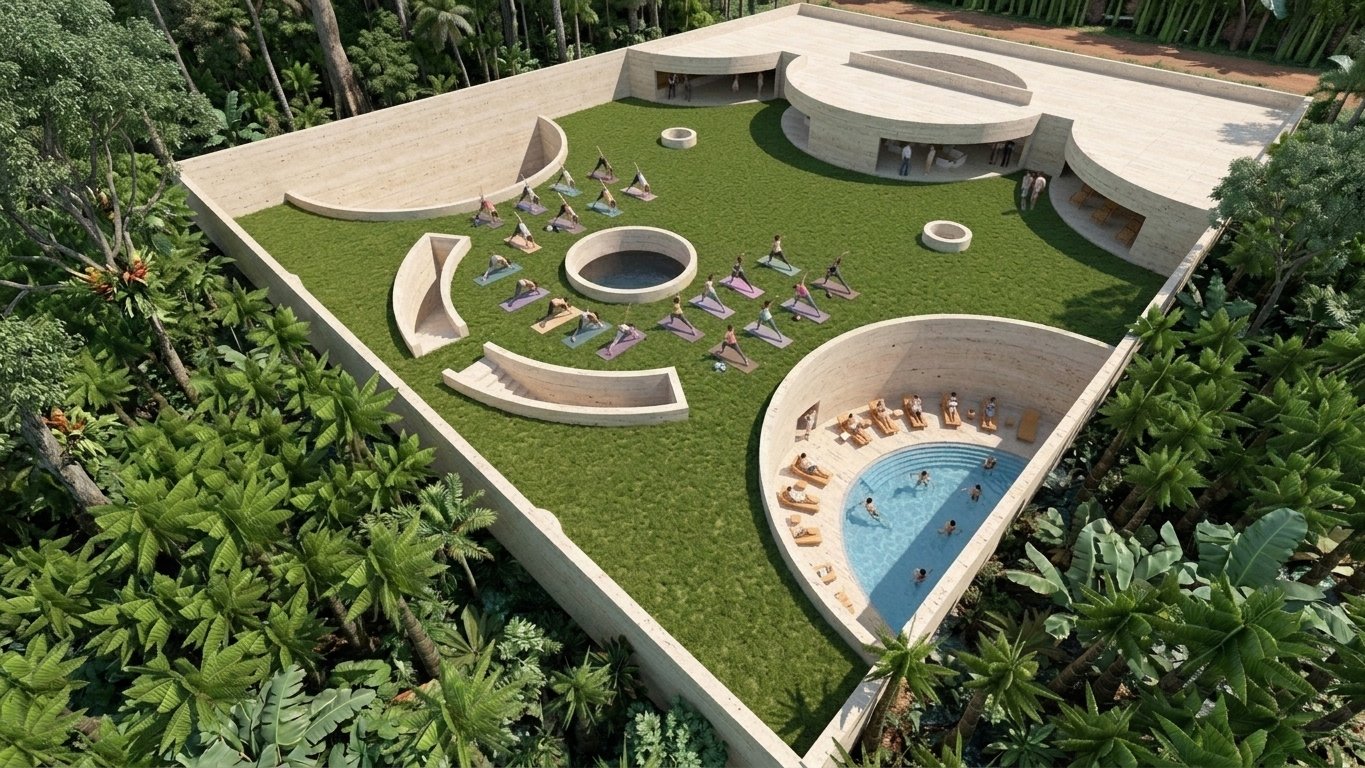
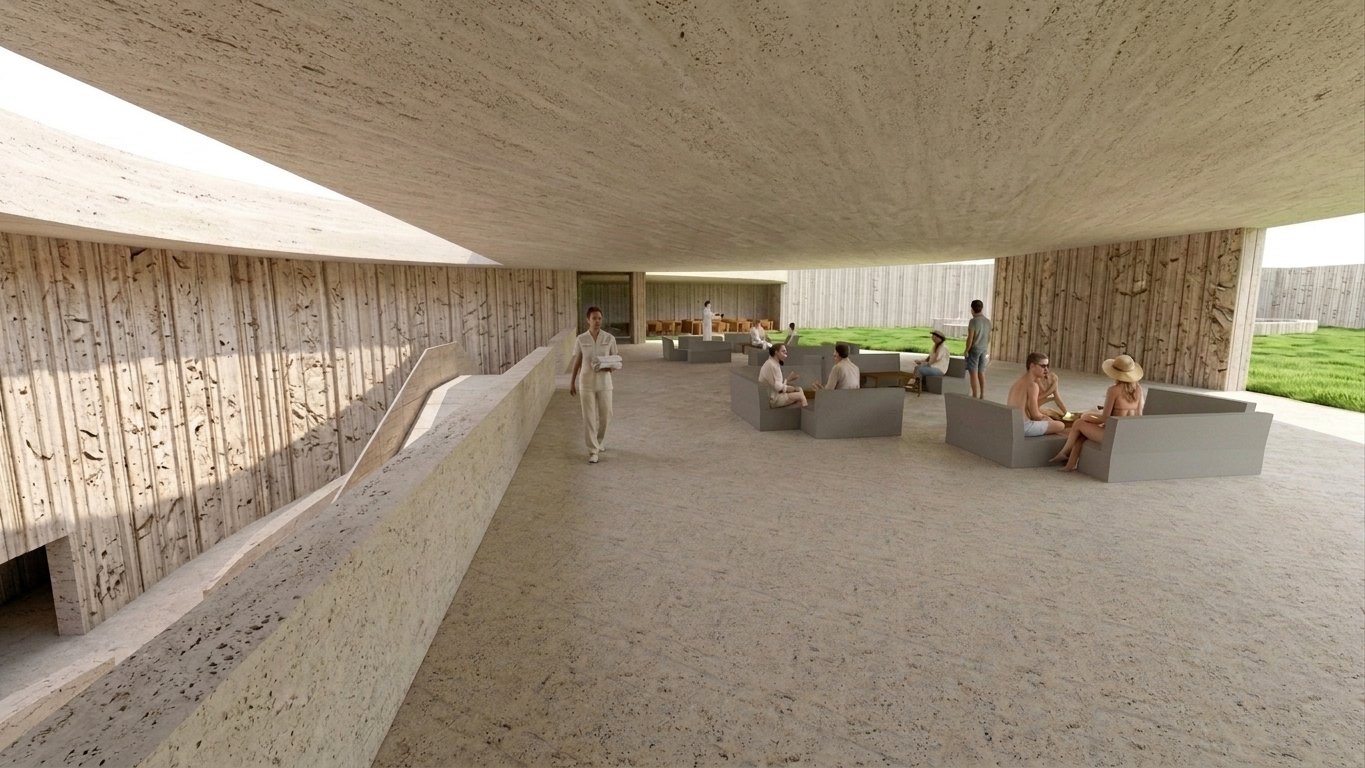
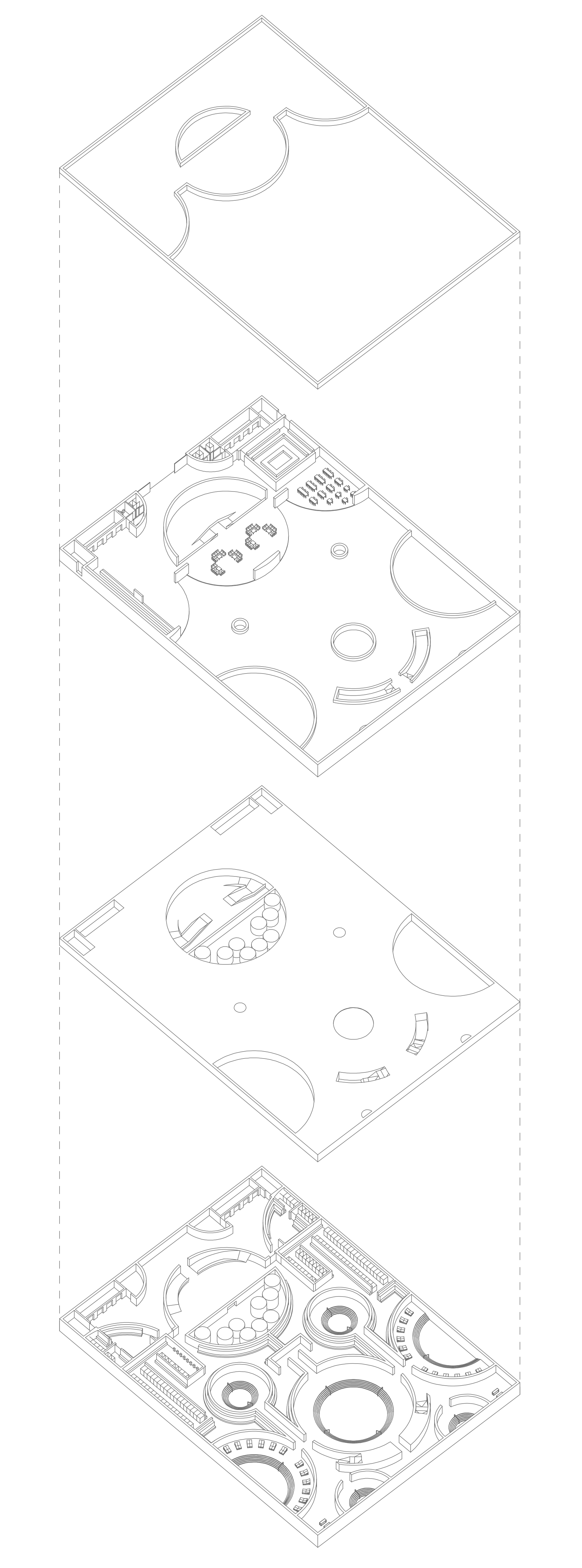
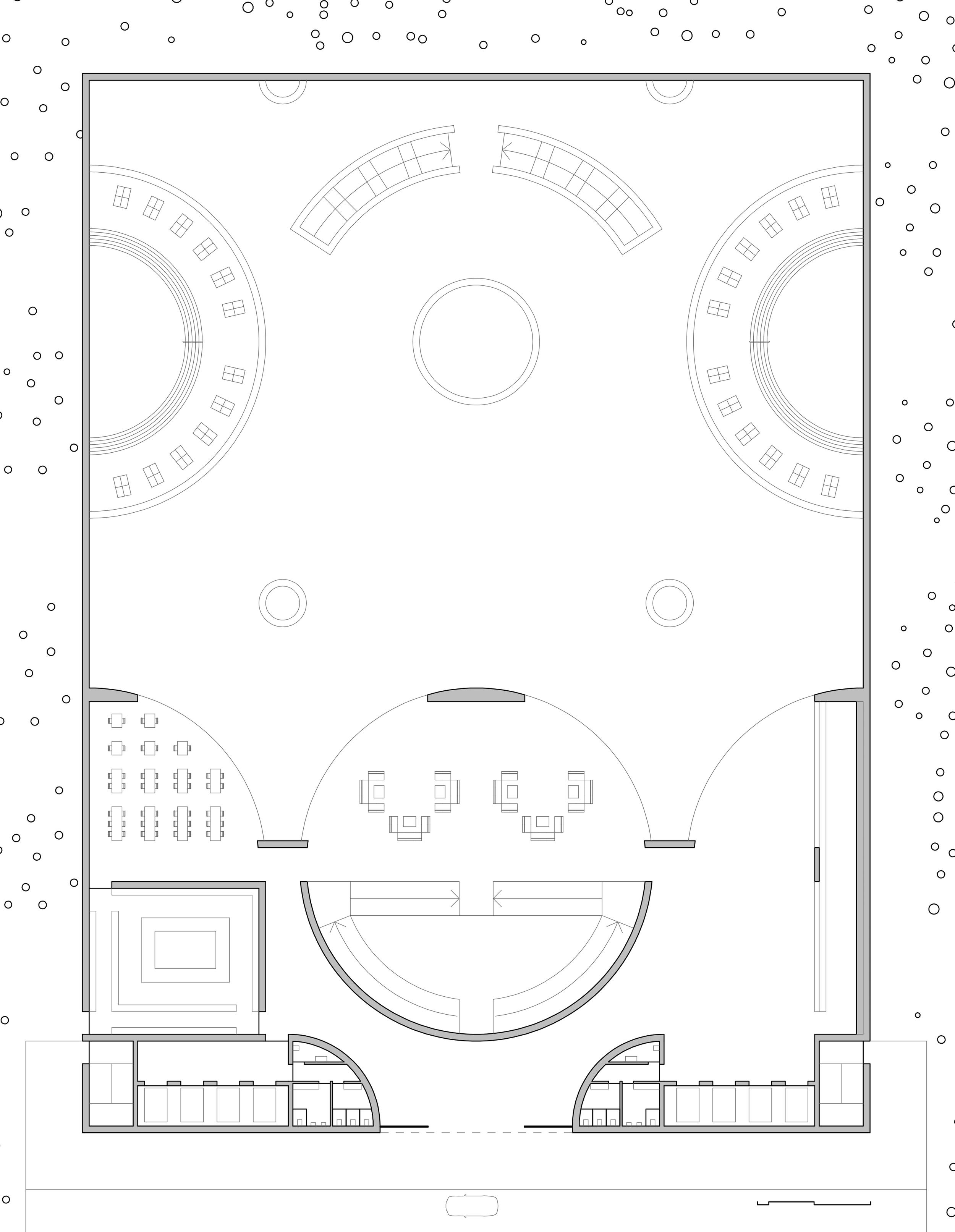
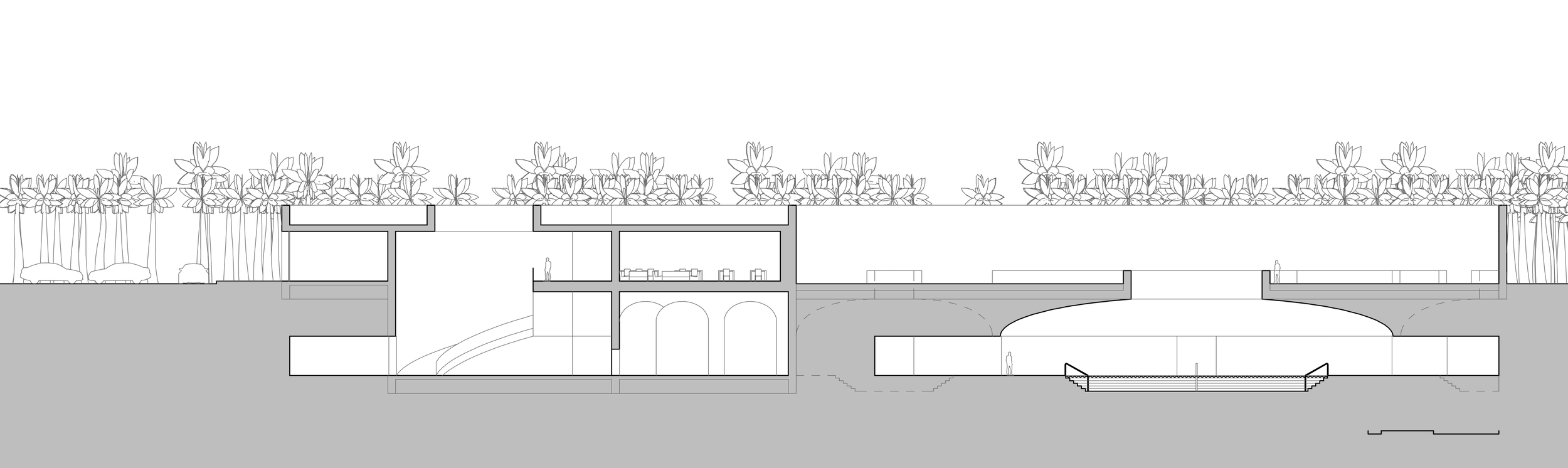
The architectural journey begins above ground, where a minimalist limestone structure serves as a calming threshold to the complex. This upper level houses the welcoming amenities, including a ticket office, a serene waiting room, and a café/restaurant. The heart of the above-ground program, however, is an expansive, walled garden punctuated by sweeping, geometric cutouts that look down into the lower levels. This verdant roof-scape acts as an active wellness hub, providing a tranquil, open-air setting for yoga, pilates, and meditation classes.
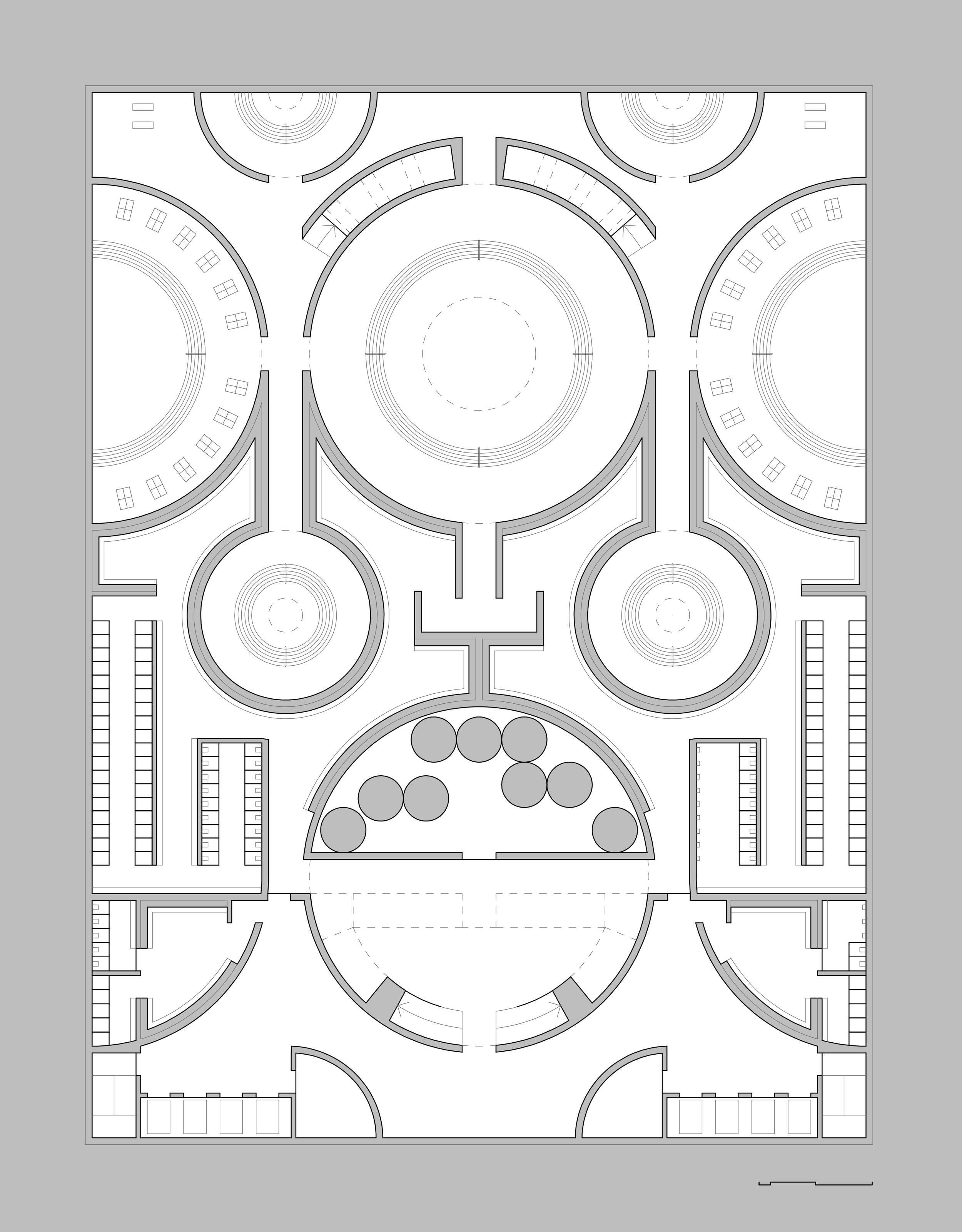
Transitioning from the bright, active garden into the bathhouse is designed as a ceremonial sequence of events—a purposeful voyage into the earth. As visitors descend into the subterranean level, they are guided by a highly structured, symmetrical floor plan. This layout seamlessly divides patrons into gender-specific changing rooms, allowing for a private, quiet transition away from the outside world. Emerging from these locker areas onto the "wet side," visitors leave their daily lives behind, stepping out into a timeless, cavernous landscape.
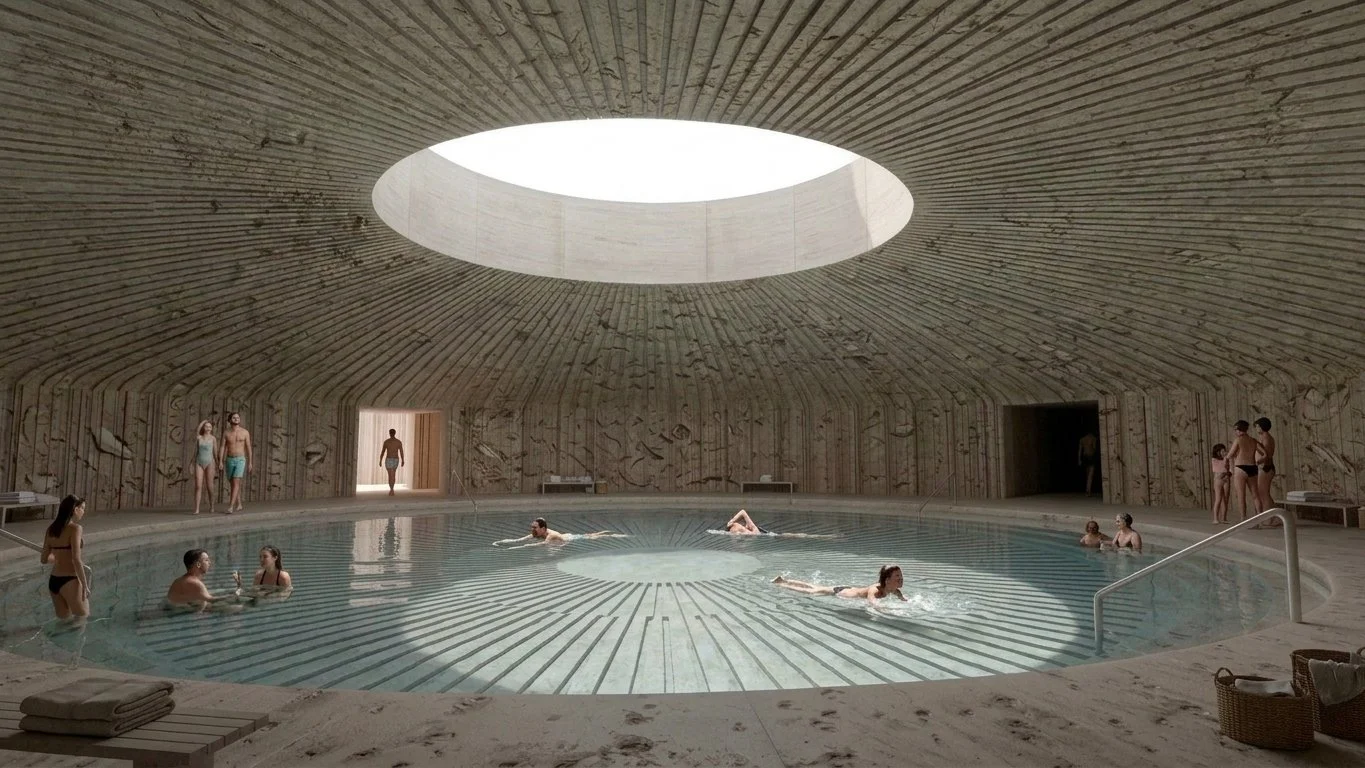
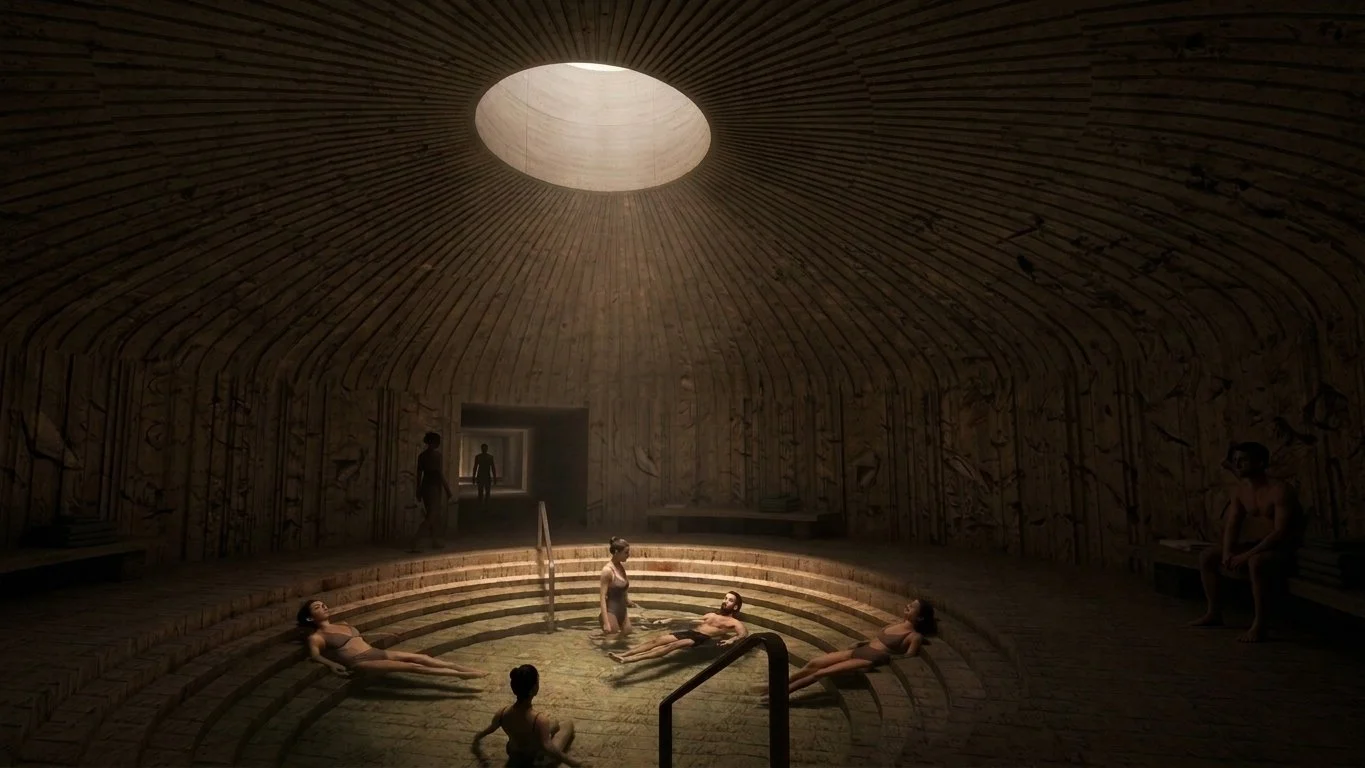
The subterranean realm is defined by a series of spectacular limestone chambers, where the raw rock has been geometrically polished to create a refined, architectural finish. The focal point is a grand, 15-meter radius central cenote chamber, illuminated by a dramatic oculus that casts a heavenly column of natural light onto the main pool below. Surrounding this central gathering space is a network of intimate, 6-meter radius satellite pools. Each of these smaller chambers is curated to offer diverse sensory experiences, playing with varying water temperatures and infused with specific natural scents, allowing users to customize their therapeutic journey.
Contrasting with the enclosed cavern spaces, the plan incorporates open-air pits on the periphery that serve as secluded, sunken beaches. These spaces allow visitors to sunbathe and relax while remaining intimately sheltered within the earth's embrace. A fluid, intuitive circulation system ensures that users can easily transition between the deep underground water world and the vibrant above-ground wellness garden. By marrying the primal energy of a natural natural sinkhole with precise, polished geometry, the project creates a holistic ecosystem where wellness, nature, and spatial poetry converge.
Research
Social Aspects:
The social foundation of this project stems from a dual research focus on ancient Mayan socio-spiritual practices and the historical evolution of the public bathhouse as a communal equalizer. In Mayan culture, cenotes were not merely water sources but vital community hubs and sacred portals to the underworld. By translating this profound communal reverence into a modern wellness context, the bathhouse fosters a shared, "unplugged" environment where digital distractions and social hierarchies dissolve. The programmatic separation of active, above-ground communal spaces (the café and yoga garden) and quiet, subterranean contemplative zones (the thermal pools) accommodates a broad spectrum of social interaction. This sequence caters to the contemporary human need for both collective, community-building fitness and solitary, silent sanctuary, creating a holistic social infrastructure for well-being.
Aesthetic Aspects:
Aesthetic research heavily referenced the dramatic interplay of light, shadow, and water found in natural, semi-open cenotes, alongside the phenomenological architectural studies of Peter Zumthor and Tadao Ando. The visual language hinges on the stark contrast between the lush, organic tropical canopy above and the serene, ordered geometry of the subterranean chambers. By incorporating the grand oculus in the 15-meter central pool, the design utilizes sunlight as an active architectural material, creating dynamic, shifting patterns on the water and the walls throughout the day. The deliberate "geometrical polishing" of the dug limestone creates a sophisticated, stereotomic aesthetic—a refined interpretation of raw, jagged caves—evoking a sense of monumental tranquility and timelessness that elevates the primal sensory experience of bathing.
Material Aspects:
Extensive material research was conducted on the geological composition of the Yucatán Peninsula, leading to the exclusive use of local limestone (coquina and sascab) for both subterranean excavation and above-ground construction. This monolithic material strategy is driven by limestone's excellent thermal mass properties, which naturally regulate the underground temperature, maintaining a cool environment in the tropical heat while retaining warmth around the heated satellite pools. Furthermore, studying the tactile qualities of the stone dictated specific finishing techniques based on the human body's interaction with the space. Rougher, naturally porous finishes are utilized above ground to encourage weathering and vegetative integration, while the subterranean areas feature a highly polished finish to be smooth against bare skin, highlighting the stone's inherent veining and fossilized inclusions while ensuring structural hygiene in high-moisture environments.
Engineering and Construction Aspects:
The project required rigorous engineering research bridging geotechnical mining techniques and advanced subterranean aquatic architecture. Because the native bedrock is highly porous karst limestone, structural analysis focused heavily on the stability of carving large-span vaulted chambers without compromising the load-bearing capacity of the active garden roof above. Waterproofing and water management were paramount; the research dictated the implementation of a closed-loop, sustainable filtration system that mimics the natural purification processes of underground aquifers, utilizing UV and natural mineral filters rather than harsh, odorous chemicals. Additionally, sophisticated, hidden HVAC strategies were developed to carefully manage subterranean humidity, mitigate condensation on the polished stone ceilings, and ensure continuous fresh air circulation within the caves without disrupting the acoustic serenity of the space.
Urban Aspects:
Urban research addressed the rapid, often ecologically disruptive tourism development currently expanding across Tulum and the wider Riviera Maya. Instead of proposing a towering, visually intrusive resort structure, the project’s low-impact, semi-subterranean typology acts as an "anti-monument," preserving the visual continuity of the jungle canopy. By burying the primary volume of the program, the design respects local zoning height restrictions and minimizes the urban footprint, practically returning the ground plane to nature and the community via the accessible, landscaped roof garden. This strategy offers a critical alternative model for eco-tourism development in sensitive regions, demonstrating how high-density programmatic needs can be met while remaining physically and visually subservient to the surrounding natural landscape.
Environmental Aspects:
Environmental research centered on the extreme fragility of the Yucatán's underground river systems and the absolute necessity of passive sustainable design. A primary environmental directive was ensuring that the excavation and subsequent daily operations would not pollute or intersect with the natural water table below; thus, the facility is engineered as an entirely self-contained, watertight vessel within the rock. Passive climatic strategies dictate the architecture: the subterranean depth utilizes the earth's constant ambient temperature to drastically reduce mechanical cooling loads, while the strategically placed overhead oculi induce natural stack-effect ventilation. Above ground, the green roof and sunken open-air pits are integrated with deep-soil zones planted entirely with endemic, drought-resistant Mayan jungle flora, promoting local biodiversity and managing localized stormwater runoff.
Economic Aspects:
The economic viability of the project was researched through the lens of Tulum’s booming luxury wellness tourism market, which shows a rapidly increasing consumer willingness to pay premiums for authentic, highly curated, and health-focused architectural experiences. Sourcing limestone directly from the site's excavation to construct the above-ground elements operates as a hyper-local, circular economy model that drastically reduces material transportation costs and carbon taxes. Furthermore, the reliance on passive cooling, natural daylighting through the oculi, and incredibly durable, low-maintenance stone finishes significantly minimizes long-term operational and energy expenditures. By offering a diverse range of programs—from a public-facing ticketed café and accessible yoga classes to premium, multi-tiered spa packages in the sensory underground cenotes—the business model ensures multiple, year-round revenue streams that are less reliant on the fluctuations of seasonal beach tourism.