Quarry Beach, Soča river, Slovenia
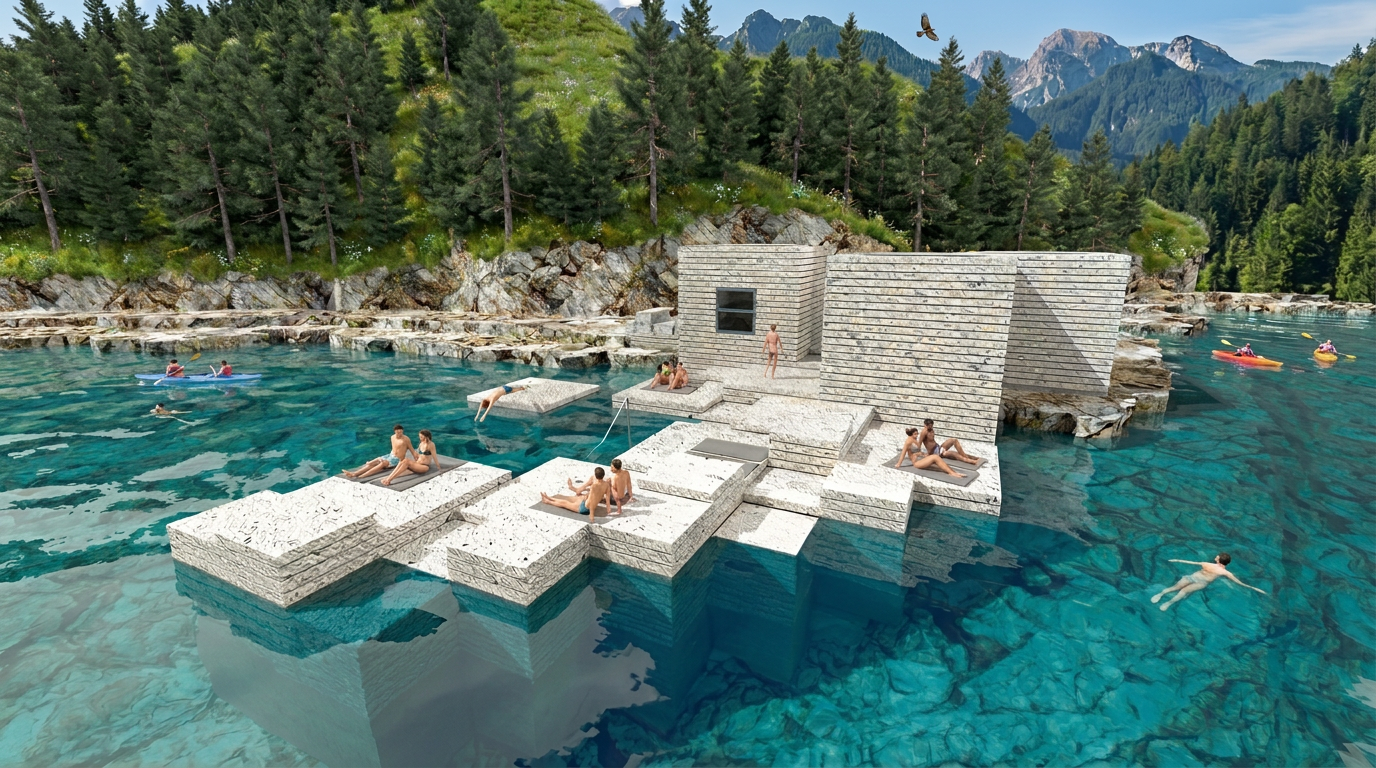
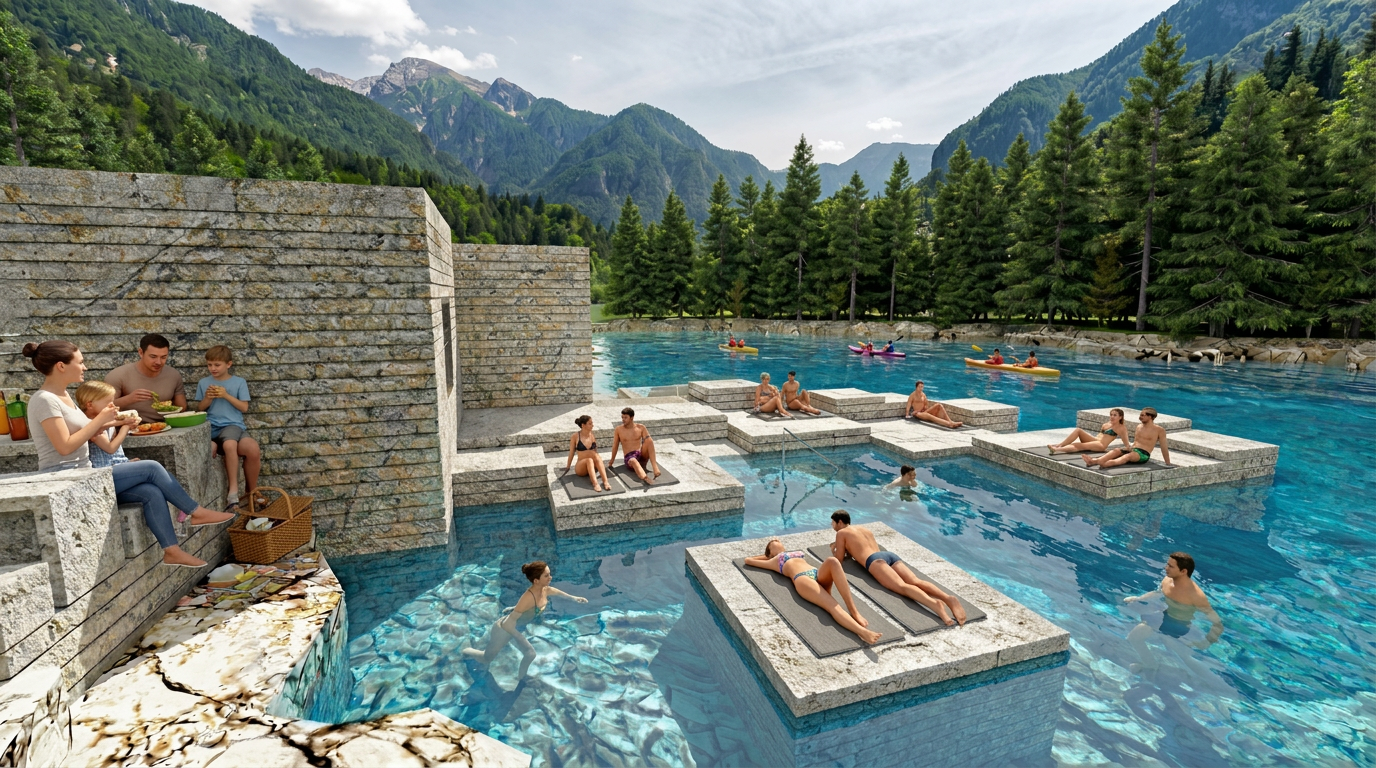
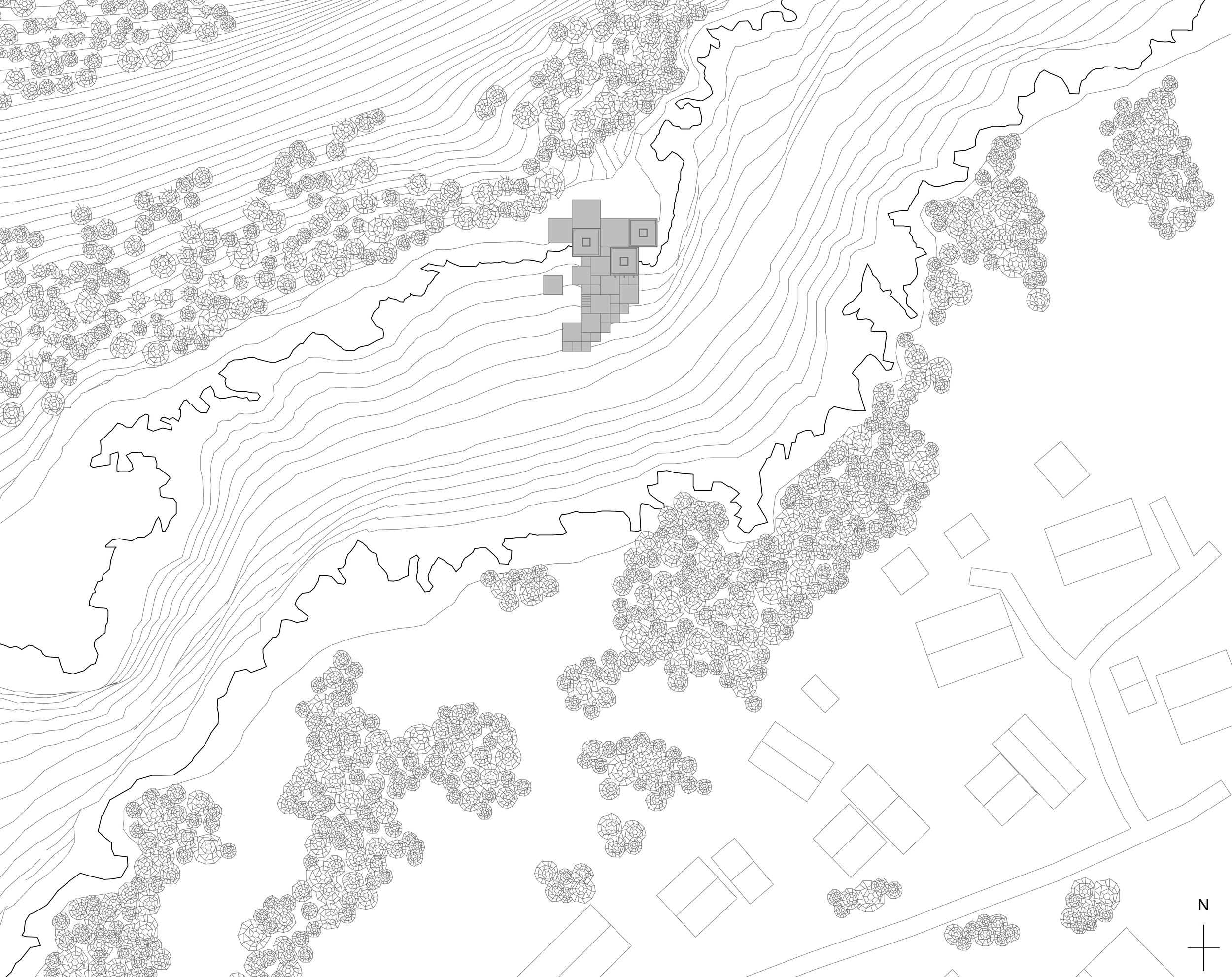
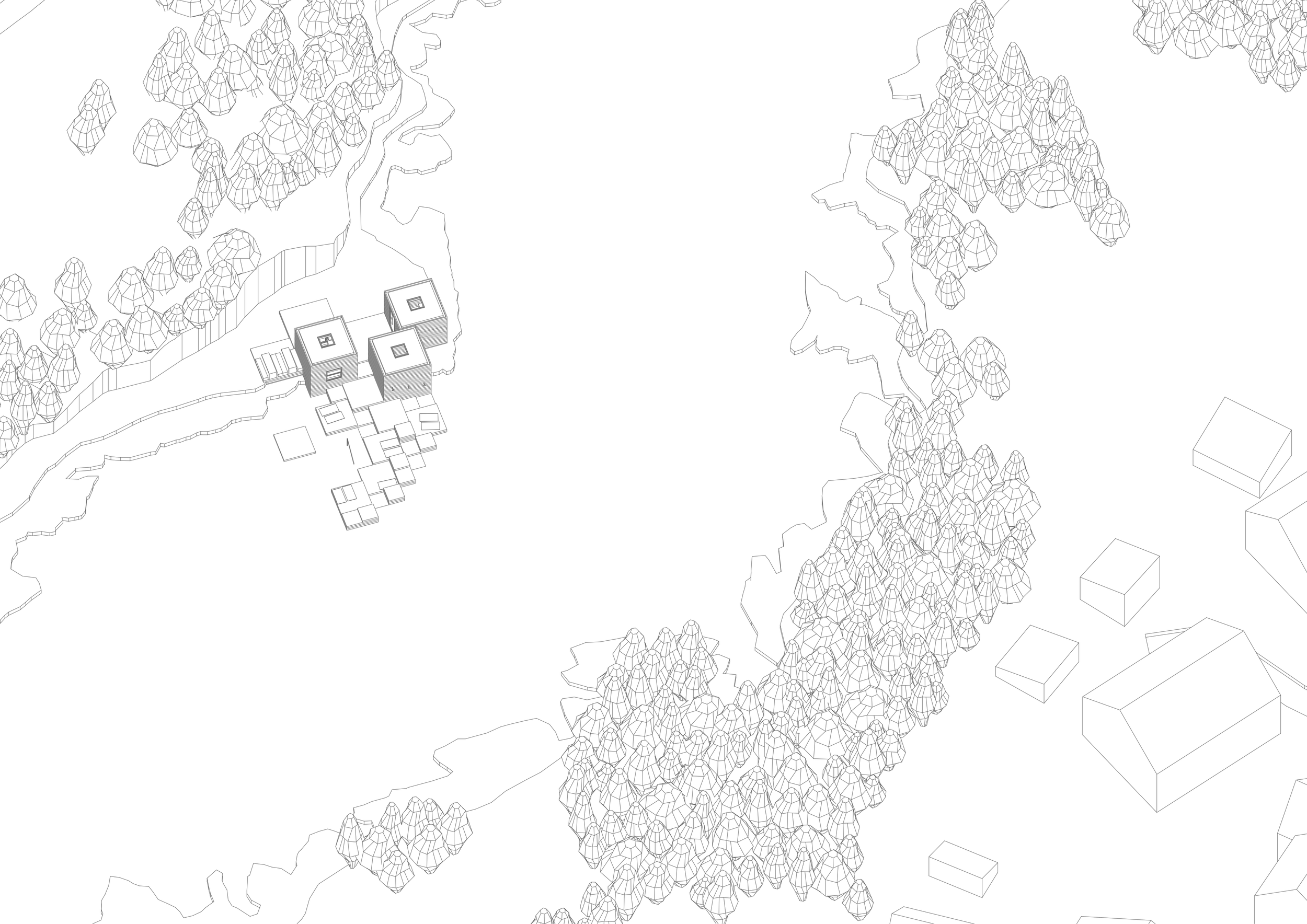
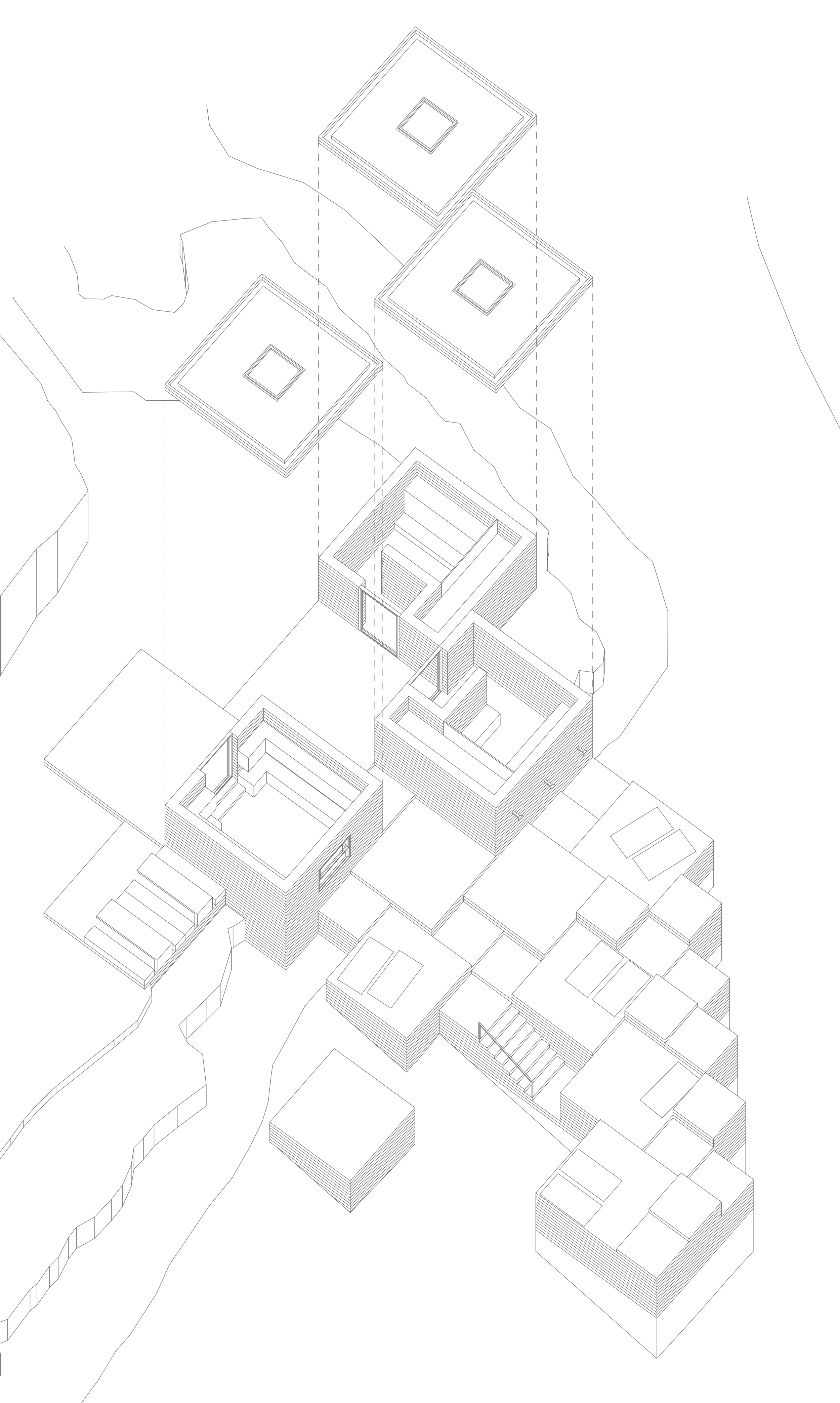
Situated in the Slovenian Alps, the Soča River is defined by its piercing turquoise waters and the stark white rocks of its riverbed. The project draws its formal inspiration from the region's history of stone extraction. The artificial topography creates a "constructed quarry," where the wild riverbank is disciplined into a rhythmic series of geometric platforms.
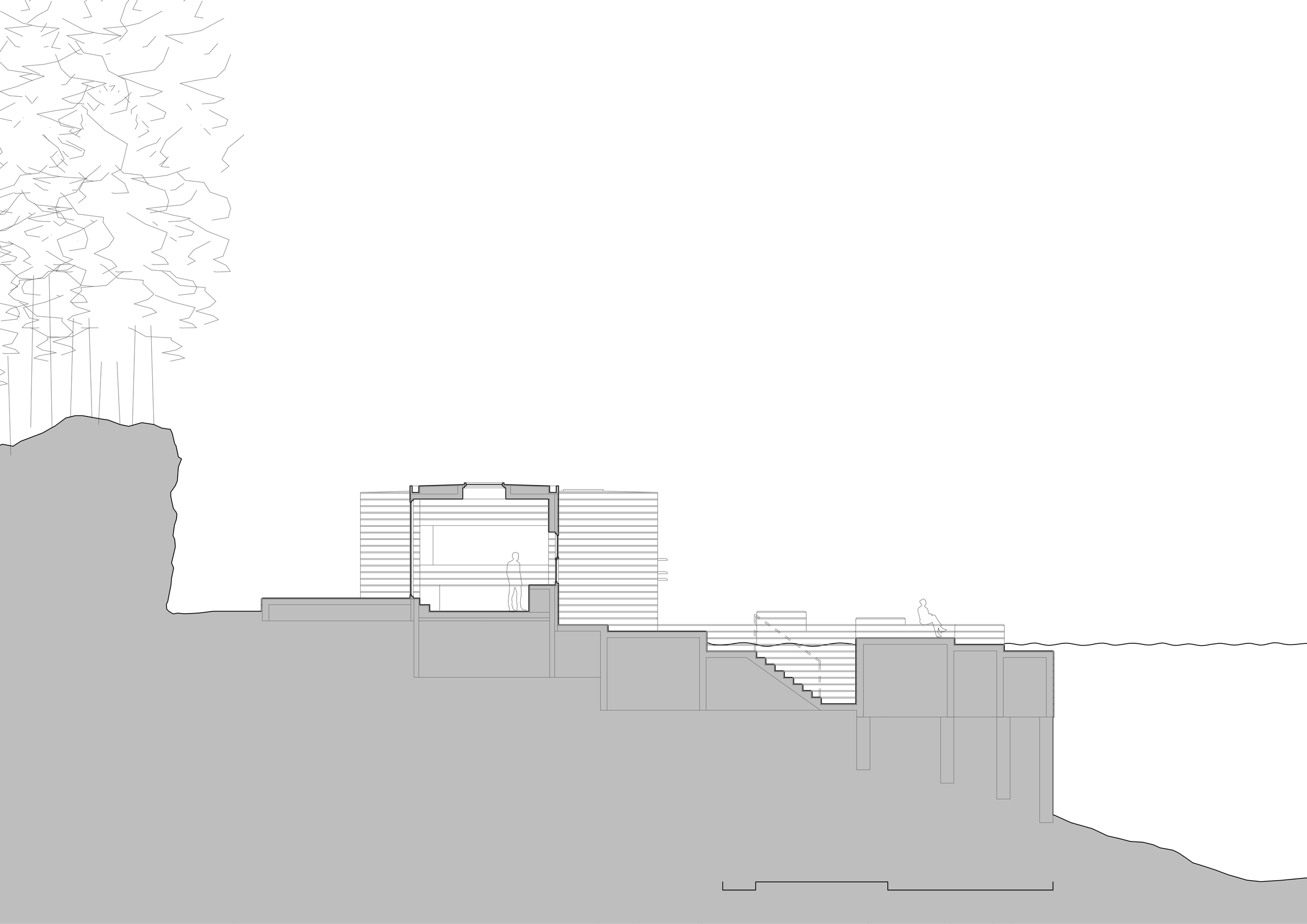
Reminiscent of the stepped cuts found in marble mines, the architecture is defined by a rigorous vertical grid. Based on the human measure of a 20cm step, these square plates cascade down toward the water. This pixelated landscape transforms the industrial aesthetic of a quarry into a place of leisure; the stone blocks function variously as stairs, sunbeds, and diving boards depending on their position in the grid.
The choice of white limestone is driven by both phenomenology and performance. Visually, the monolithic white stone dissolves the boundary between the built object and the natural geology. Tactilely, the stone’s natural porosity provides a distinct grip, ensuring safety as users move between the wet and dry zones. Furthermore, the light color reflects the intense alpine sun, preventing the stone from overheating and keeping the surfaces cool enough for barefoot walking and sunbathing.
Embedded within this stone landscape are the functional volumes. A cafe pavilion and facilities for changing and bathing rise as larger, solid masses from the platform base. External showers are integrated directly into the stepped terraces, celebrating the ritual of bathing within this cool, tactile stone environment.

Research
Social Aspects:
The project reimagines the riverbank not just as a point of access, but as a space of social condensation. By standardizing the topography into a 20cm vertical step (the ergonomic measure of the human body), the landscape becomes democratic and accessible. The platforms are indeterminate in function—serving as stairs, seats, or sunbeds—which invites users to interpret the space freely. This "inhabited topography" fosters community interaction, transforming the solitary act of swimming into a collective social ritual, reminiscent of ancient Roman baths but set within an open alpine landscape.
Aesthetic Aspects:
The design operates on the concept of the "Constructed Quarry." Rather than mimicking the organic shapes of nature, the architecture imposes a geometric order that highlights the wildness of the surrounding context. The stark white geometry creates a high-contrast dialogue with the deep turquoise of the Soča River and the green of the forest. This phenomenological approach emphasizes the presence of the architecture as a "white cut" in the land, creating a serene, monolithic atmosphere that frames the changing light and water of the Alps.
Material Aspects:
The selection of white limestone is driven by a synthesis of haptic performance and contextual integration. Visually, it connects the intervention to the white boulders native to the riverbed. Functionally, the material is essential for safety and comfort: the stone’s natural porosity provides a high-grip, non-slip surface, preventing accidents in the wet transition zones. Furthermore, the light color (high albedo) reflects solar radiation, ensuring the platforms do not overheat. This allows users to walk barefoot and lie directly on the stone even during peak summer temperatures.
Engineering and Construction Aspects:
The project utilizes a strict modular grid based on the 20cm unit. This logic simplifies construction in the difficult terrain, allowing for a system of pre-cut stone blocks that are stacked to accommodate the varying slopes of the riverbank. This "pixelated" approach allows the structure to withstand the hydraulic pressure of the river; the lower platforms act as breakwaters during high tides. The construction details—including integrated external plumbing for showers—are concealed within the cladding, maintaining the purity of the stone volume.
Urban Aspects:
Although located in a natural setting, the project applies the principles of Landscape Urbanism. It structures the wilderness, providing a defined "public square" on the water. The intervention organizes tourist flows, preventing erosion caused by informal path-making and concentrating human activity in a durable, designed zone. It acts as a threshold, mediating the transition from the regional road and forest down to the aquatic level, effectively functioning as a micro-urban node in the Soča Valley.
Environmental Aspects:
The project is designed with a "passive" interaction strategy. The use of local stone reduces the carbon footprint associated with transportation. The massive stone platforms possess high thermal inertia, helping to regulate the microclimate around the cafe and changing areas without mechanical air conditioning. The design respects the hydrology of the Soča River; the stepped profile allows water to rise and fall naturally without damaging the structure, and permeable joints between plates allow for natural drainage, maintaining the soil health beneath.
Economic Aspects:
The investment in high-quality, monolithic limestone is calculated for long-term viability. Stone is a material with an extended lifecycle and minimal maintenance costs, resisting the freeze-thaw cycles of the Alps better than concrete or wood. By creating a distinct architectural landmark, the project adds value to the local tourism economy, attracting visitors not just for the river, but for the unique experience of the "stone beach," thereby generating revenue for the supporting cafe and local municipality.