Tree House in San Francisco
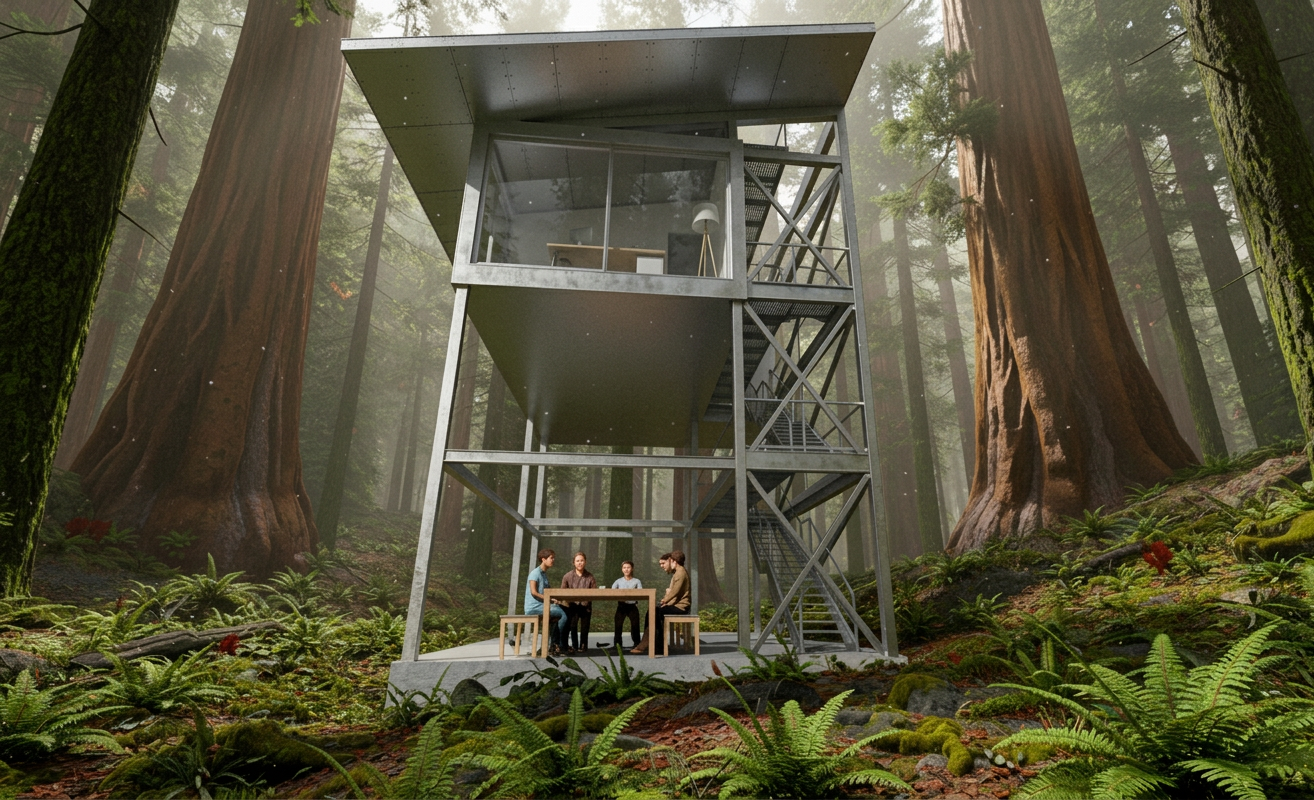
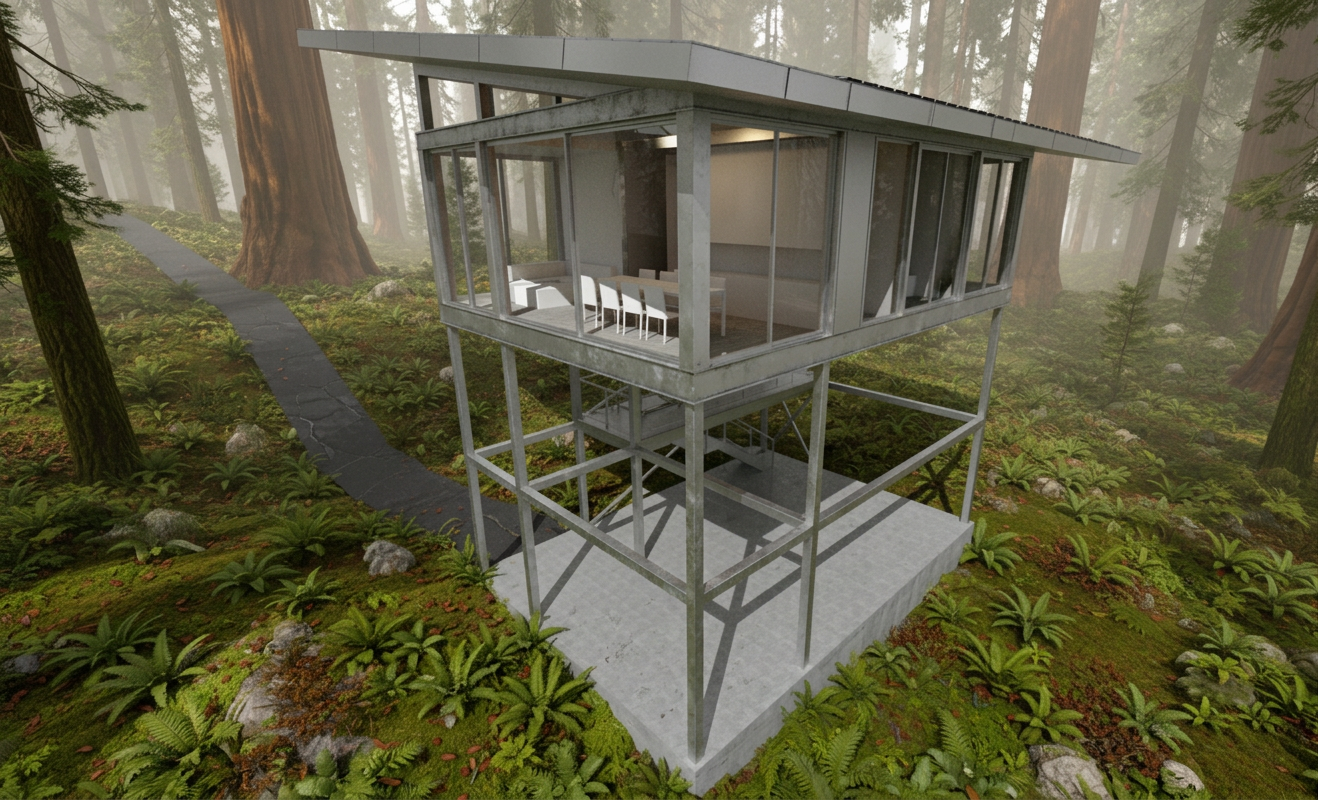
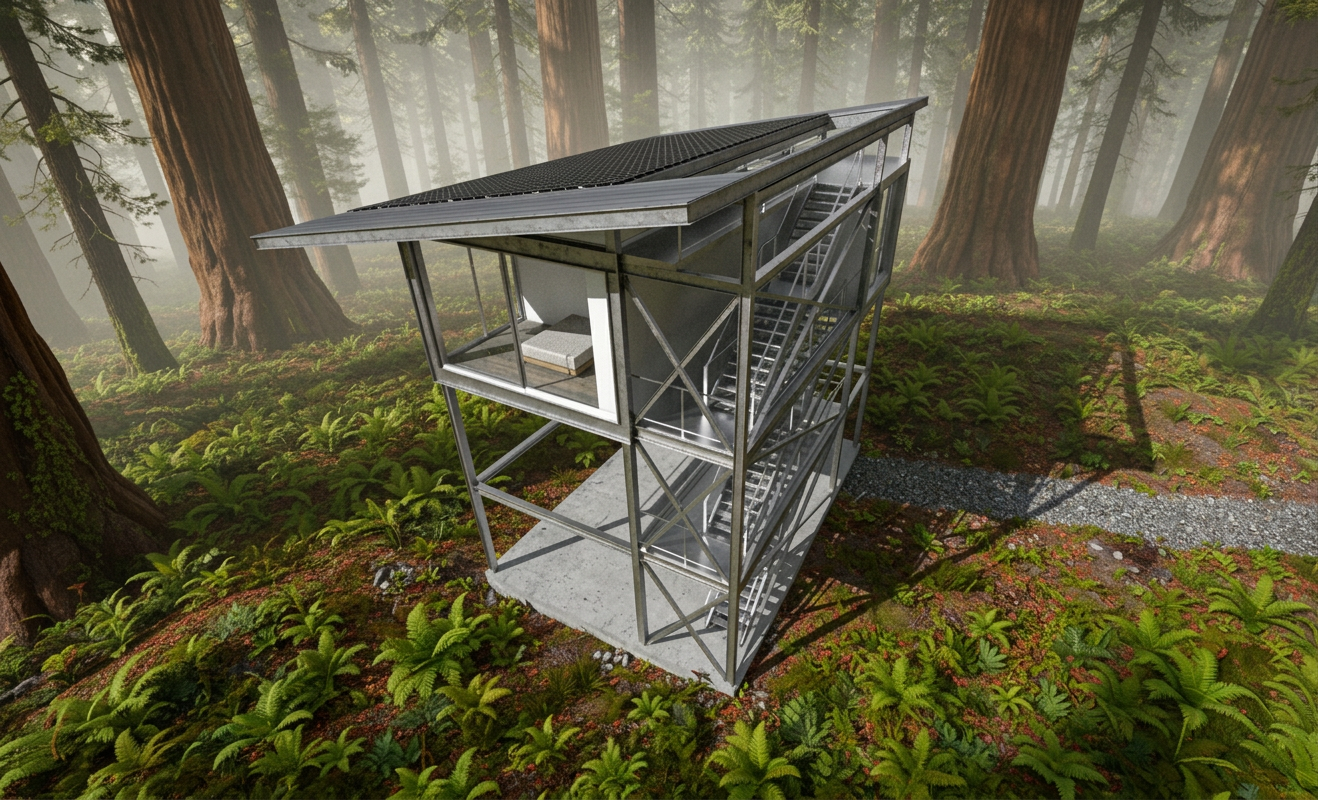
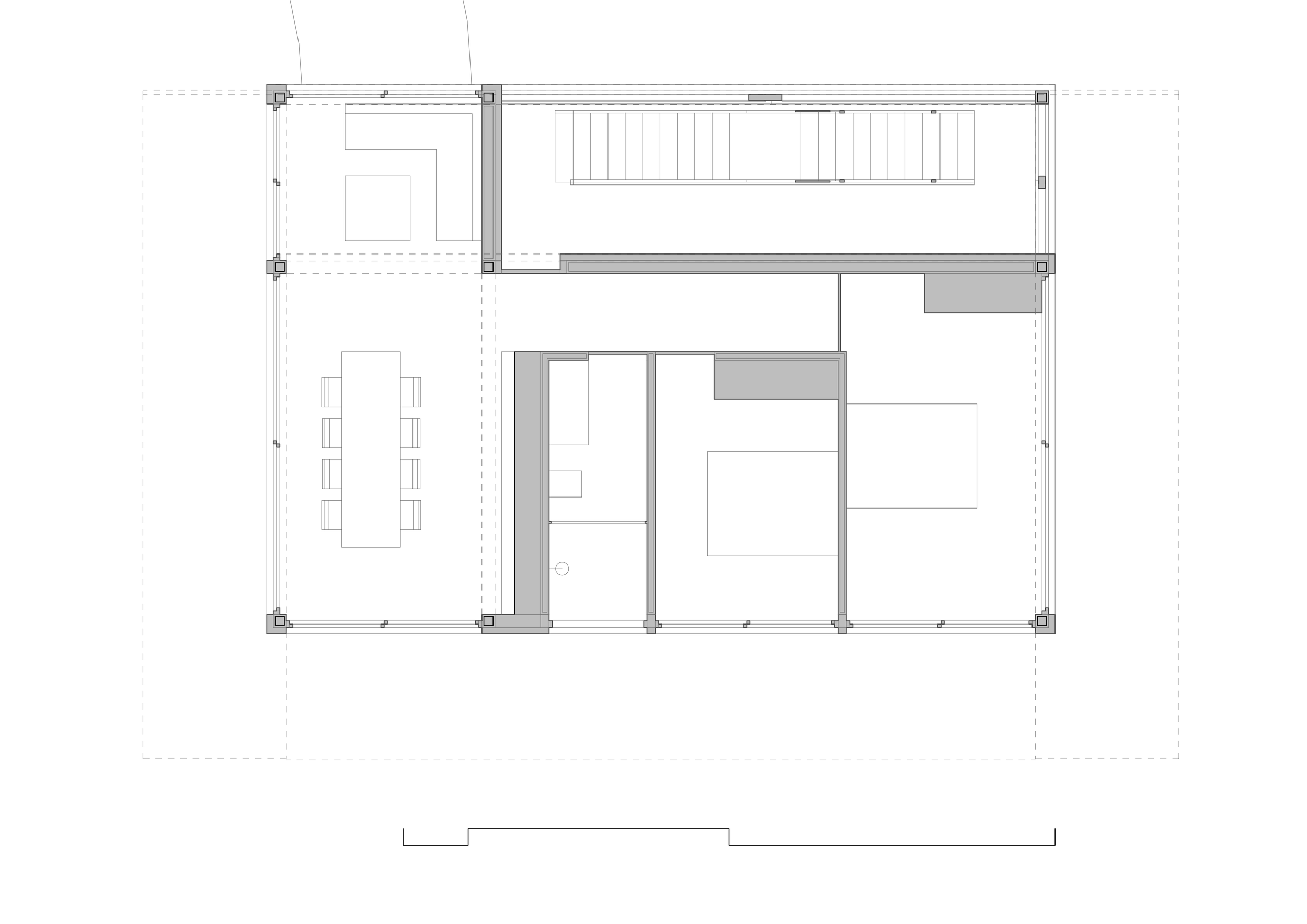
This project proposes a home in Muir Woods for a tech founder seeking a tangible connection to the natural world as an antidote to their digital life. The design is not a rustic cabin, but a precise, contemporary object designed to amplify the sensory experience of the ancient redwood forest.
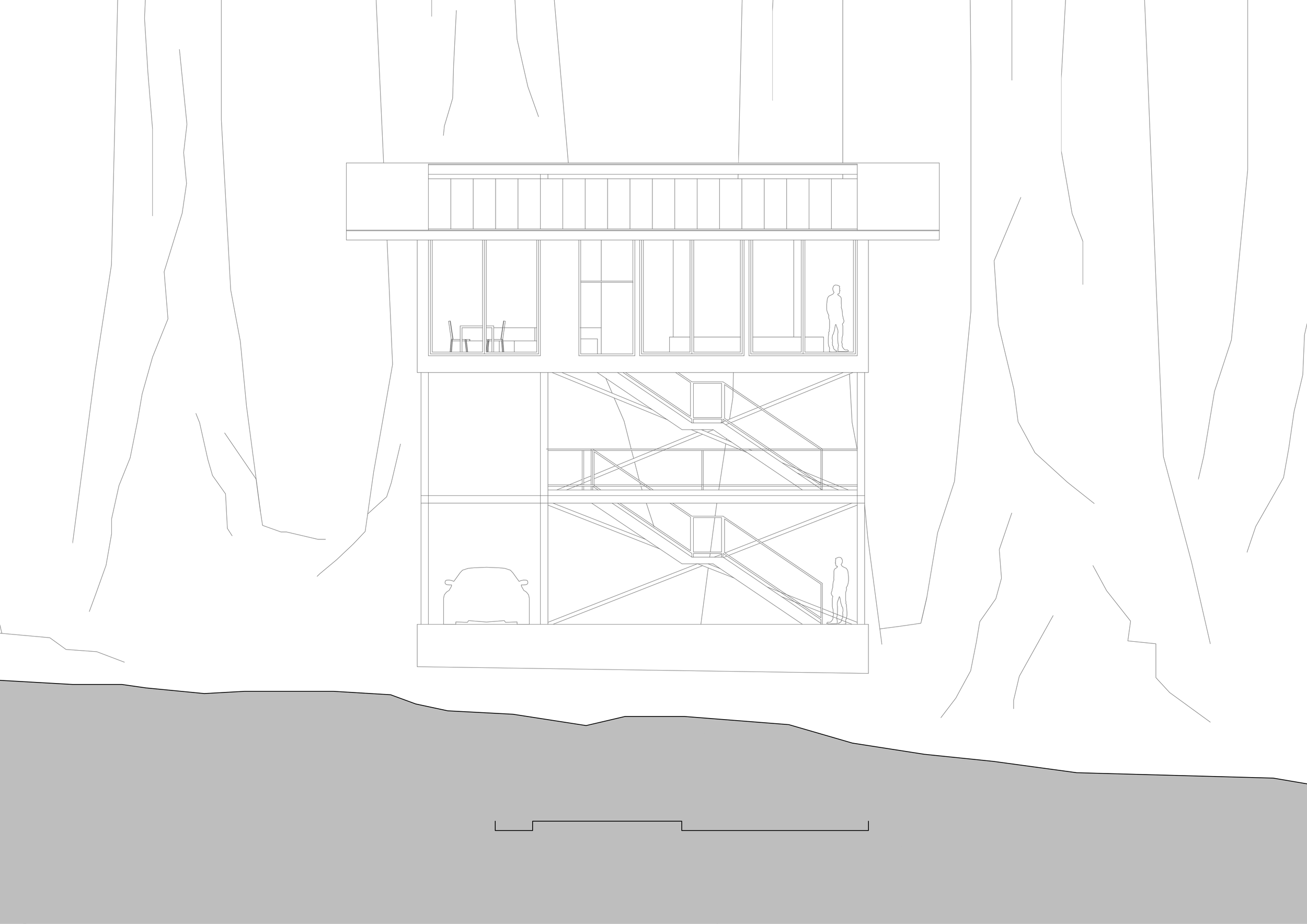
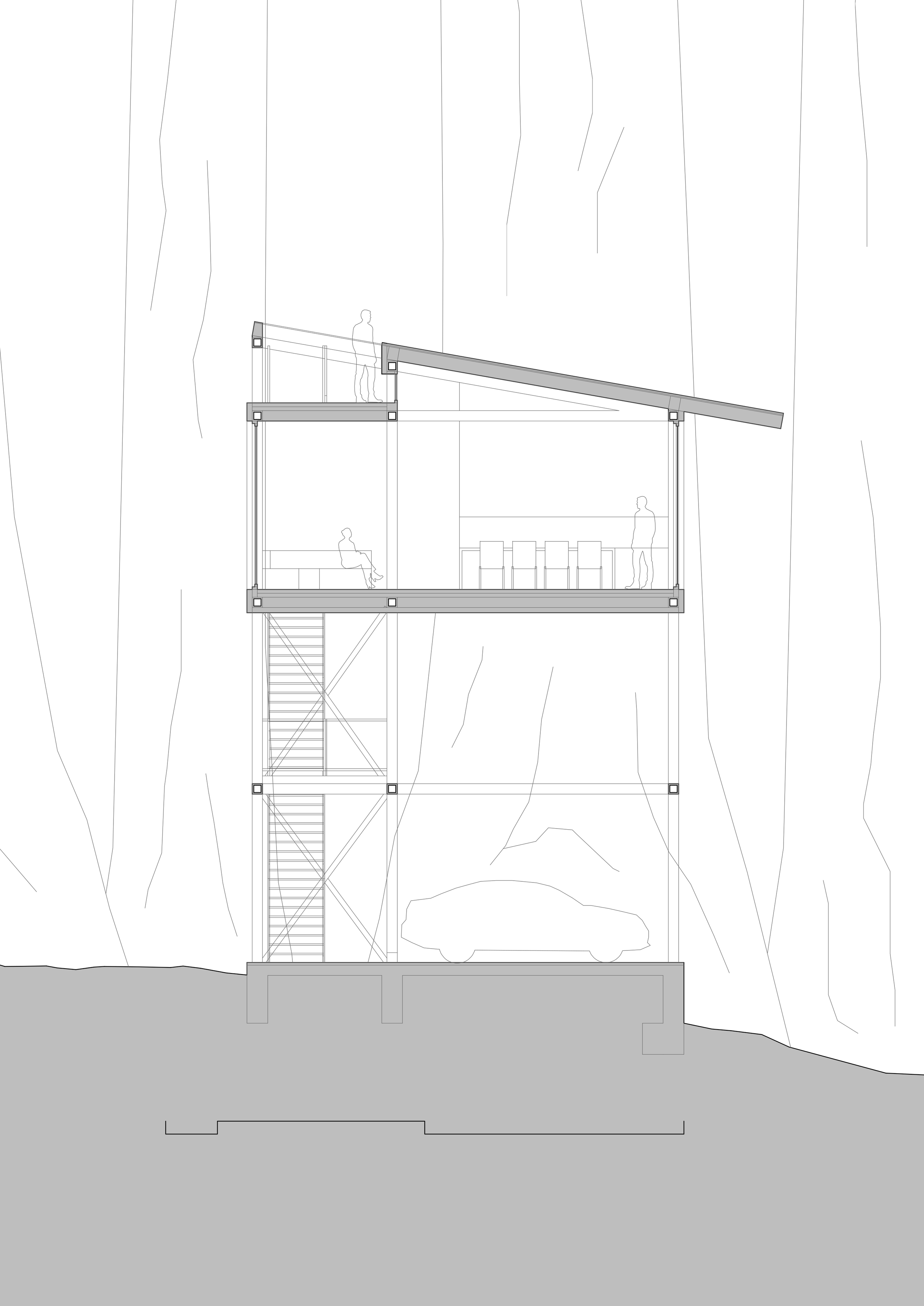
The architecture is conceived as a vertical journey that mirrors the ascent of the giant redwoods, creating distinct experiences at each level:
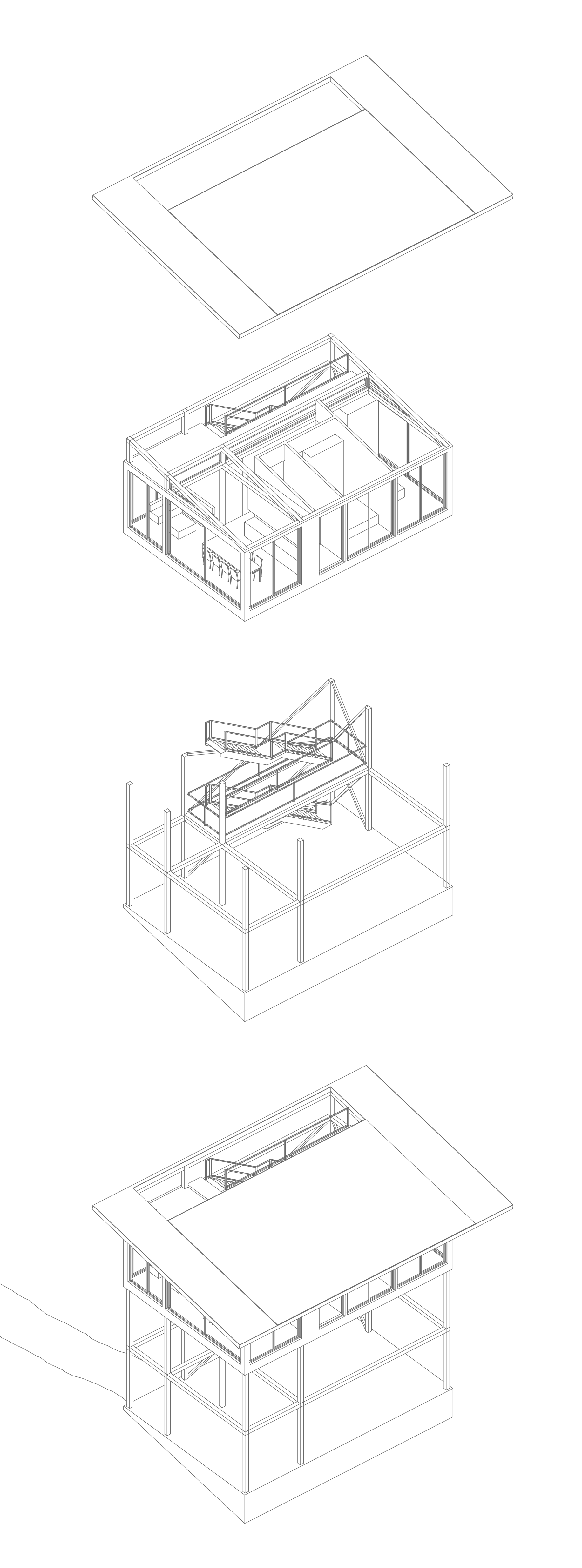
The house is anchored by a concrete platform that serves as a multi-use outdoor living space. This solid base establishes a secure threshold in the wild, contrasting with the lighter structure above.
A lightweight steel frame, with its diagonal bracing left exposed, forms the skeleton of the house. This pragmatic choice for seismic safety is expressed as a core design feature, making the home's strength and resilience an honest and visible part of its aesthetic.
The exterior is clad in fire-resistant aluminum. Its matte surface captures and diffuses the forest's ambient light, causing the building to subtly shift in appearance with the weather and time of day—from dissolving into mist to shimmering in the sun.
An external staircase winds up through the steel structure, transforming the act of moving between floors into a conscious journey. This path takes the inhabitant from the dark forest floor, through the mid-level trunks, and up to the canopy.
The main living space is a glass box suspended high among the branches. This top floor dissolves the boundary between inside and out, offering full immersion in the light and life of the treetop canopy.
The journey culminates in a rooftop platform that rises above the tree line. This open-air deck provides a final, expansive view of the forest canopy and the sky, offering a space for ultimate contemplation.
Research
Social Aspects:
The cultural and historical significance of Muir Woods is profound, having been inhabited by the Coast Miwok people for thousands of years before becoming a pivotal site in the American conservation movement. Research must focus on honoring this legacy, particularly the Coast Miwok's relationship with the land, which was based on sustainable stewardship. Community engagement in Marin County is critical, as new development in such a sensitive area will face intense scrutiny. The project must navigate the tension between preservation and use that has defined the area's modern history. Investigation into the architectural history of Marin County reveals a rich tapestry of styles, from Victorian and Craftsman to a significant embrace of Mid-Century Modern and contemporary designs that prioritize a connection to nature. This project aligns with the regional precedent of architecturally significant homes that blend modernism with the landscape.
Aesthetic Aspects:
The core aesthetic direction is rooted in architectural phenomenology, which prioritizes the sensory and experiential qualities of a space over pure formalism. Research will explore how materials and light can create a "poetic dwelling" in the Heideggerian sense, fostering a deep connection between the inhabitant and the environment. Key precedents are contemporary buildings that use reflective or metallic skins not to mimic, but to enter a dialogue with their natural surroundings by capturing and diffusing ambient light. This approach turns the building into a dynamic canvas that reflects the changing conditions of the forest. The design's vertical ascent and minimalist interior are intended to dissolve the boundary between inside and out, a strategy seen in other modern homes designed for immersion in nature.
Material Aspects:
The selection of materials is driven by resilience and sensory experience. Non-combustible aluminum cladding is a primary focus for its superior fire resistance, a critical consideration in this vulnerable context. Research will identify anodized or matte-finished aluminum that offers durability and the desired light-diffusing aesthetic. The use of a steel frame is crucial for seismic stability in the Bay Area. For the interior, sustainably sourced materials that enhance indoor air quality and offer a warm, tactile contrast to the exterior will be investigated. High-performance glazing is another key area of research to ensure thermal efficiency while maximizing the visual connection to the forest canopy.
Engineering and Construction Aspects:
A primary engineering challenge is the design of a lightweight, elevated steel structure on a sloped, ecologically sensitive site. Research will focus on construction techniques that minimize the building's footprint and disruption to the forest floor, such as using pin piles or a carefully contained concrete plinth. Seismic engineering for the steel frame is paramount and will be a visible, celebrated element of the design. The project will also require advanced strategies for erosion and sediment control during construction to protect the surrounding ecosystem. Collaboration with builders experienced in sensitive site work and the assembly of precise, prefabricated components will be essential.
Urban Aspects:
Although located in a natural setting, the project is subject to the stringent planning and zoning regulations of unincorporated Marin County. Research must thoroughly investigate Title 22 (the Development Code) and any specific community plans or coastal zoning rules that apply to the site. Given the proximity to a national monument, regulations regarding viewsheds, ridgelines, and environmental protection will be particularly strict. The project's minimal footprint and elevated design are a direct response to these anticipated constraints. Access for construction vehicles and future utilities will also require careful planning and permitting.
Environmental Aspects:
The project's environmental strategy is one of respectful coexistence. A core research area is the specific ecology of the Coast Redwood forest, including its soil composition, hydrology, and the habitat of protected species. The design must avoid disturbing the root systems of the ancient trees and maintain natural drainage patterns. Sustainable practices will be integral, including strategies for water conservation, energy efficiency that exceeds California's standards, and maximizing natural light to reduce electricity consumption. The building's entire lifecycle, from material sourcing to waste management during construction, will be planned to minimize its environmental impact.
Economic Aspects:
Building a high-end custom home in Marin County involves significant investment, with hard construction costs potentially ranging from $800 to over $1,000 per square foot, exclusive of design, permitting, and site work. Research indicates that while sustainable and durable materials may have higher upfront costs, they lead to substantial long-term savings through reduced maintenance and lower energy bills. Architecturally significant homes in the Bay Area command premium market values and are sought after by discerning buyers. This project, with its unique concept and high-quality execution, is positioned to be a valuable long-term asset, appealing to a niche market that values design, privacy, and a profound connection to nature.