Kindergarten, Reykjavik, Iceland
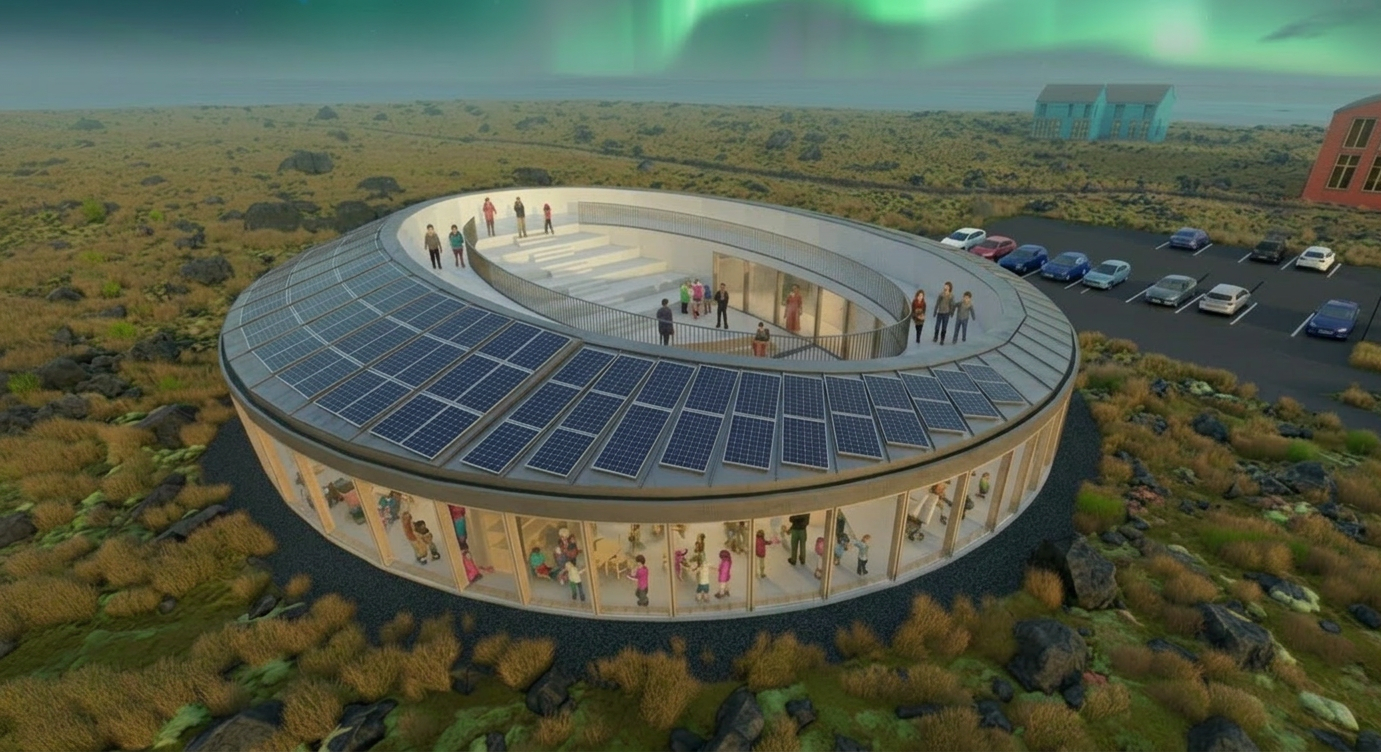
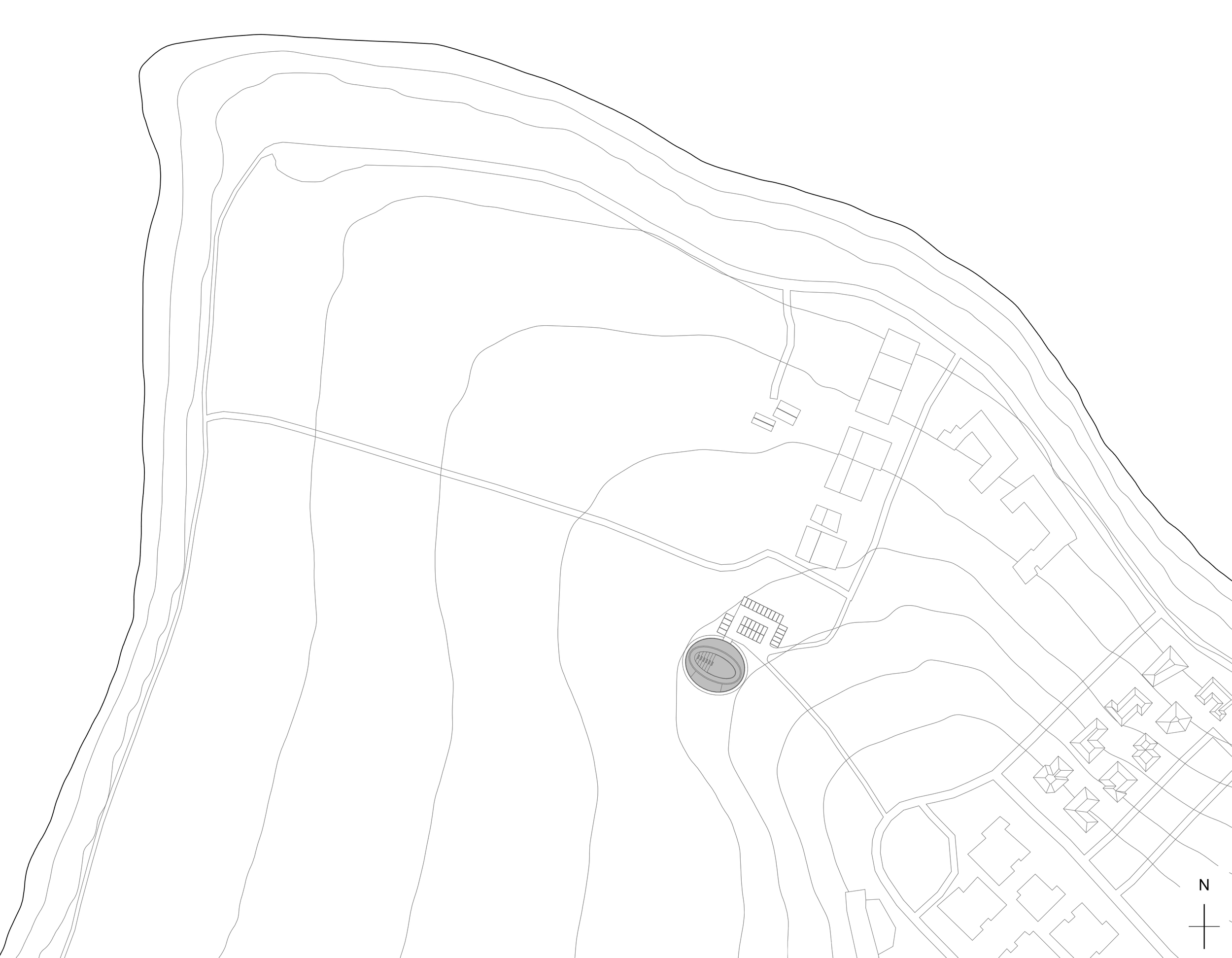
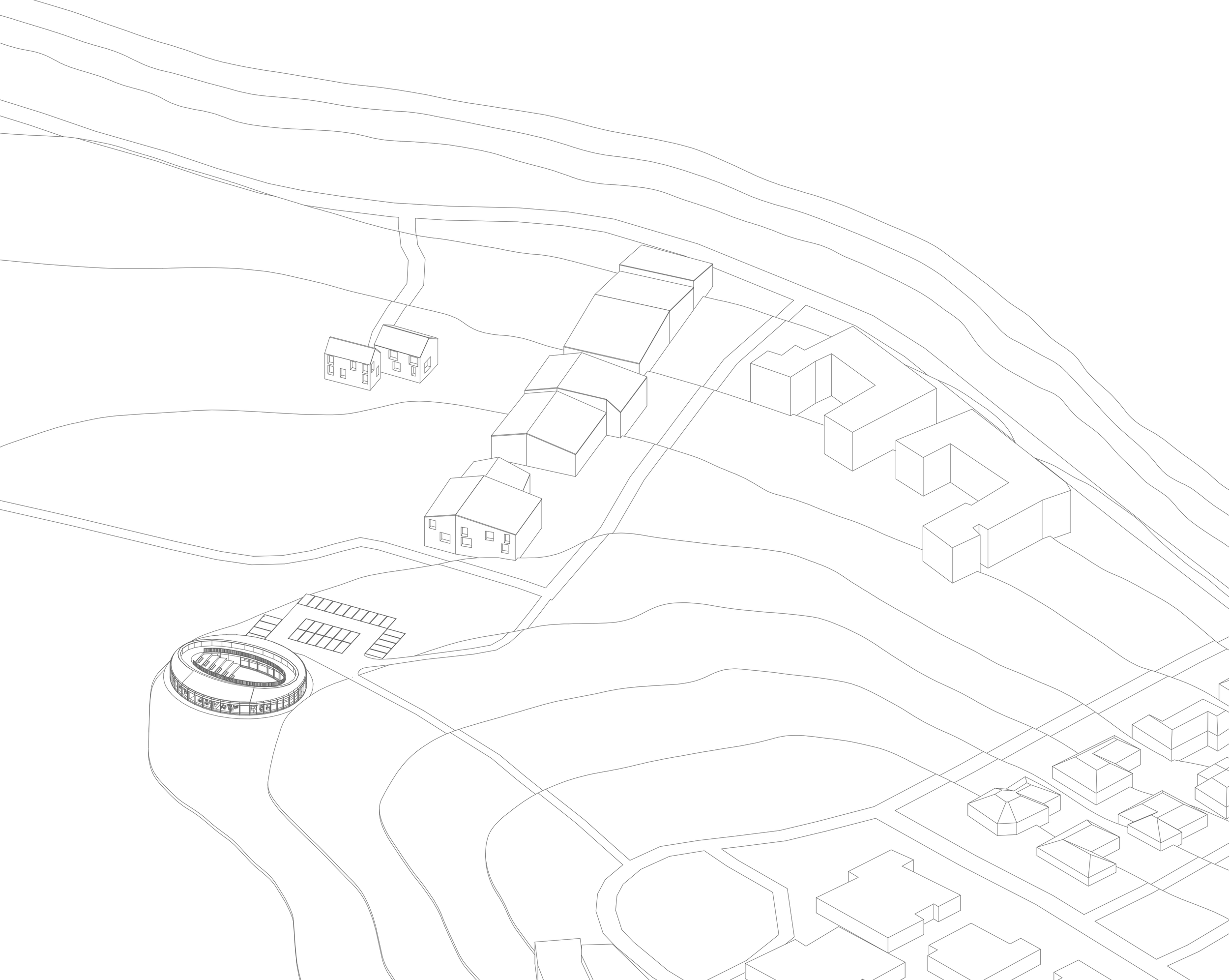
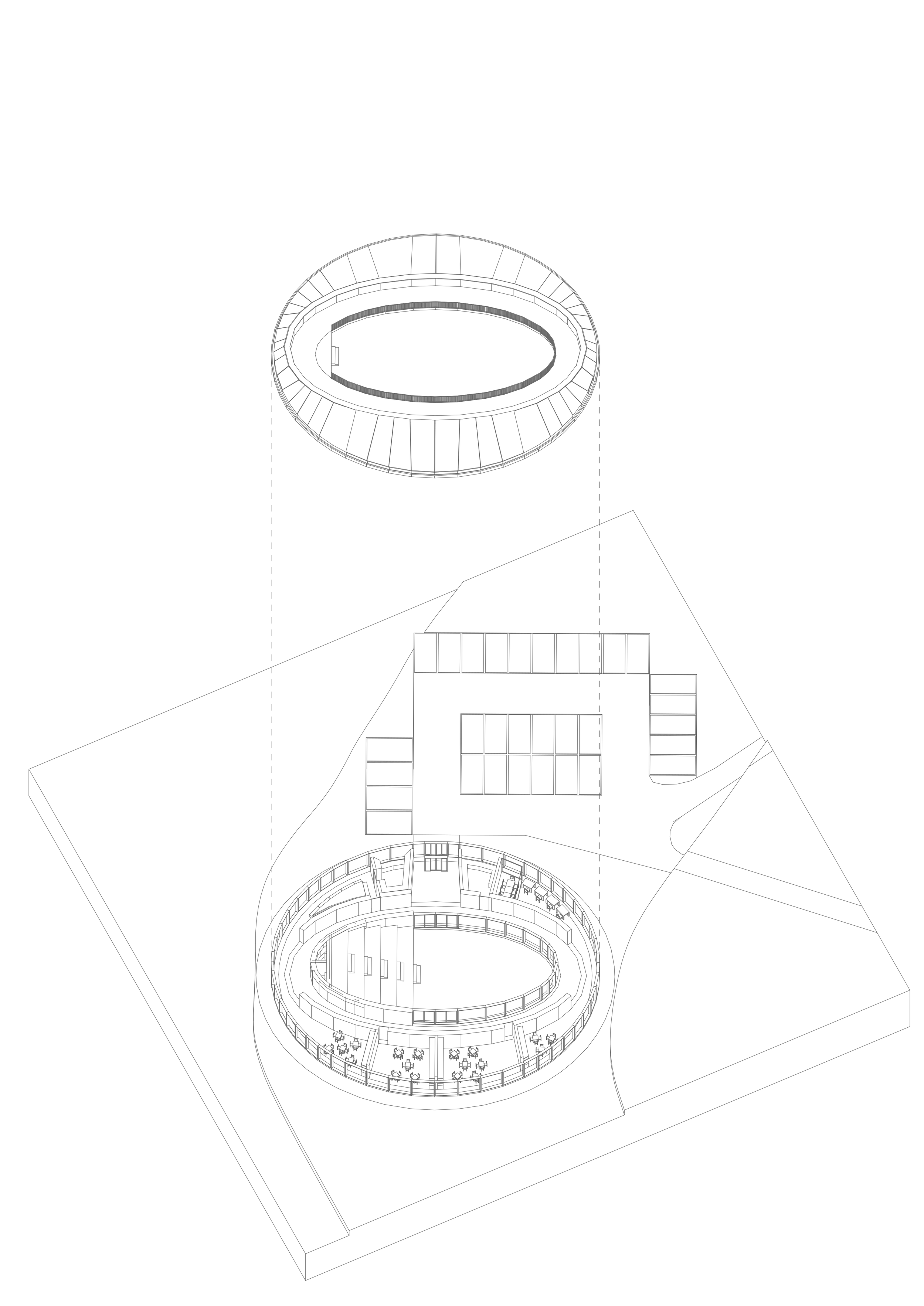
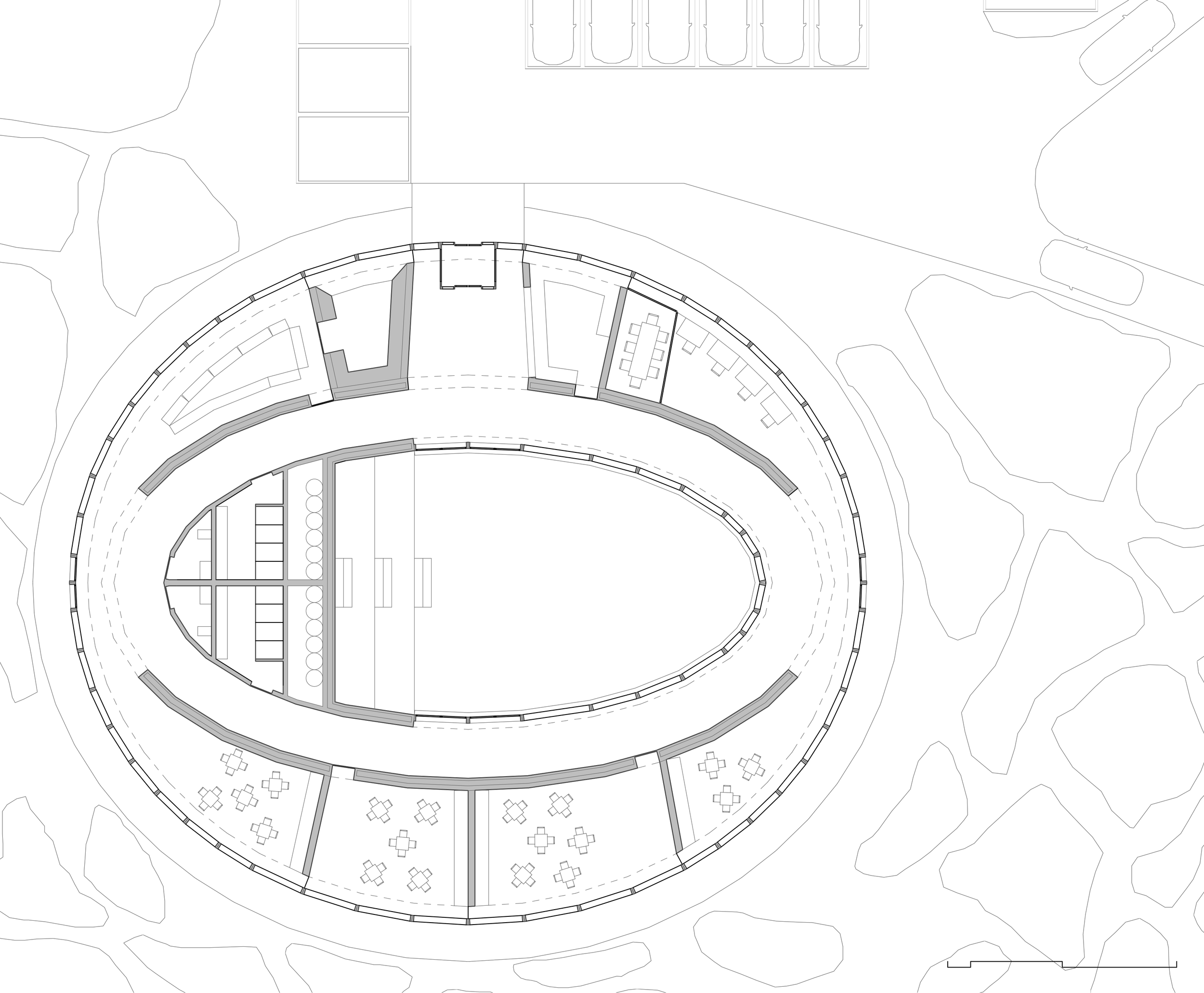
Nestled at the edge of Reykjavik, where the urban fabric meets the vast grass fields and the dramatic North Atlantic coastline, the Kindergarten reimagines early childhood education in harmony with Iceland's rugged landscape and extreme climate. Inspired by the sleek, elongated forms of traditional Viking ships—symbols of exploration and resilience—the building adopts an oval plan that evokes fluidity and movement, while providing a protective enclosure for young learners.
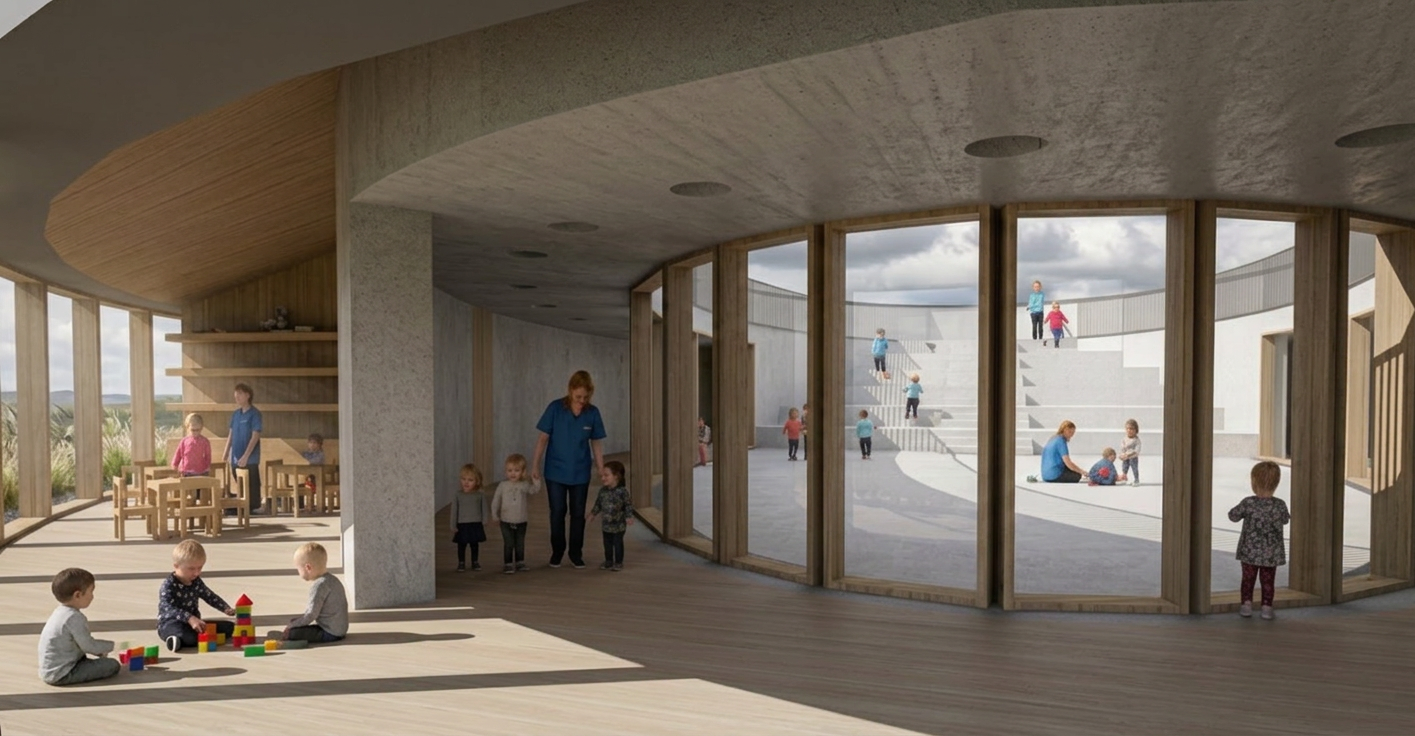
At the heart of the design is a central open courtyard, serving as a sheltered outdoor play area that fosters connection to nature. This introspective space is encircled by the building's programmatic zones, including classrooms, activity rooms, and communal areas, all arranged along the oval perimeter. The facade features expansive floor-to-ceiling glass walls, maximizing solar gains in a region where daylight is scarce for much of the year due to its high latitude. This transparency not only floods interiors with natural light but also blurs the boundaries between inside and out, offering panoramic views of the sea and surrounding fields to inspire curiosity and environmental awareness.
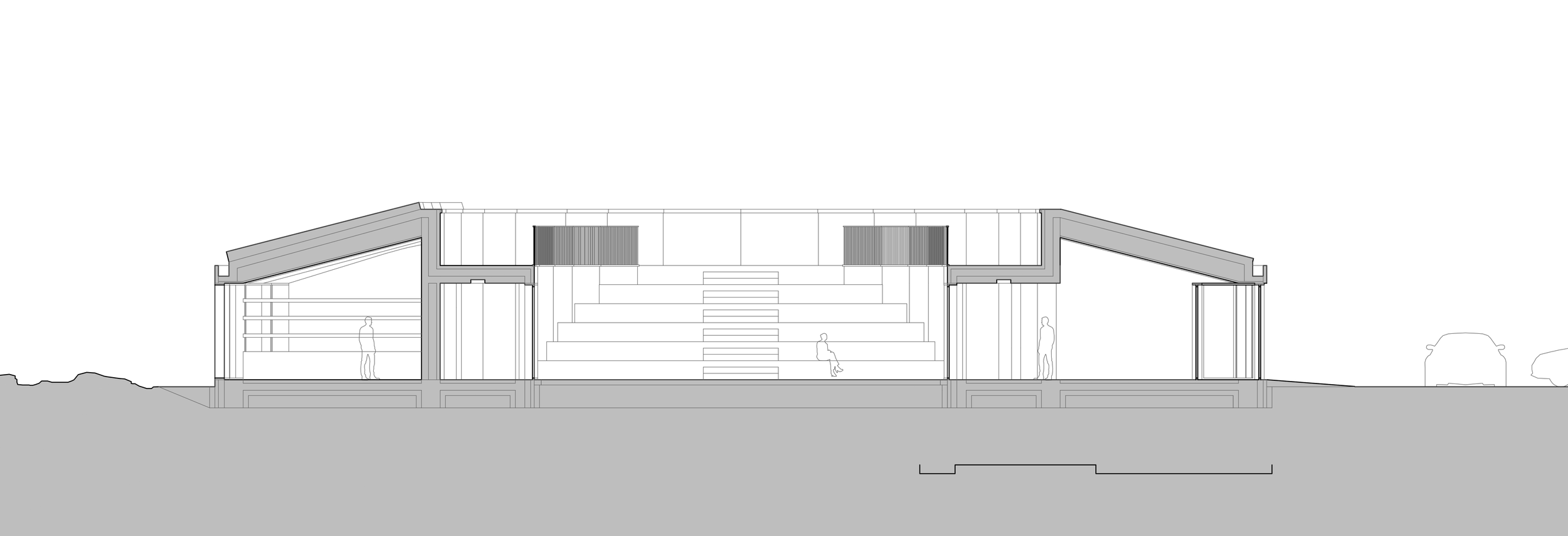
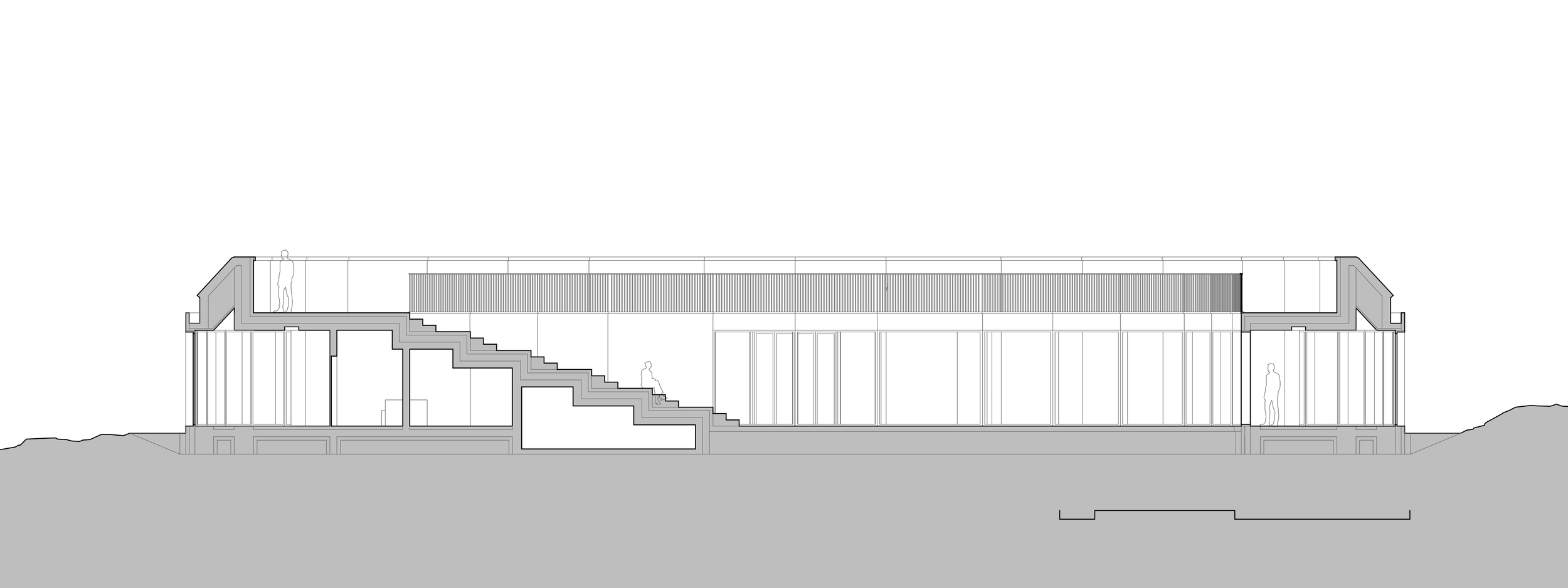
A standout feature is the elevated, walkable oval roof, which creates a safe, wind-protected platform for outdoor activities. Accessible via integrated ramps and stairs, this rooftop terrace allows children to engage in play, gatherings, or quiet observation under the northern lights or stormy skies, all while shielded from Iceland's notorious strong winds. The roof's zinc cladding, a staple in Icelandic architecture for its durability against harsh weather, ensures longevity and low maintenance.
Structurally, the kindergarten employs robust concrete for foundations and load-bearing walls to anchor the building against seismic activity and wind loads. In contrast, interiors utilize light-colored Nordic birch wood for flooring, partitions, and millwork, introducing warmth and a tactile softness that counters the cold exterior environment. This material palette emphasizes sustainability, drawing on local resources to minimize environmental impact while creating inviting, child-centric spaces.
Through its form, materials, and site integration, the Kindergarten embodies a thoughtful response to Iceland's unique context, promoting safety, sustainability, and sensory exploration for the next generation.
Research
Social Aspects:
The Kindergarten's design prioritizes social interaction by incorporating a central courtyard and an elevated walkable roof, enabling safe outdoor activities that foster children's social development and peer relationships in a protected environment. In Iceland, outdoor time in preschools is seen as transformative for social dynamics, with research showing that it enhances health factors, emotional connections, and cooperative play among children, particularly through activities in natural settings. Teachers view the outdoors as essential for children's enquiries, imaginative play, and structured learning, integrating it into daily practices to support social and cognitive growth. This approach aligns with Nordic traditions where outdoor education promotes inclusivity, risk-taking, and community building, contributing to well-rounded social skills in early childhood.
Aesthetic Aspects:
Drawing inspiration from Viking ships, the kindergarten's oval form evokes fluidity and resilience, blending historical Norse motifs with modern minimalism to create a visually harmonious structure that integrates seamlessly with Iceland's rugged landscape. This aesthetic revival incorporates elongated shapes and symbolic elements, such as rustic wood accents and clean lines, reflecting a fusion of tradition and contemporary design seen in Scandinavian architecture. The expansive glass facade and sloped zinc roof add a sleek, light-filled appeal, reminiscent of Viking longhouses adapted for today's contexts, emphasizing warmth, natural materials, and a sense of exploration. Such designs not only pay homage to cultural heritage but also enhance the building's visual modesty, allowing it to rhyme with the surrounding sea and grass fields for an inviting, timeless aesthetic.
Material Aspects:
The kindergarten employs a thoughtful material palette suited to Iceland's harsh climate, using concrete for durable foundations and structural walls, light-colored Nordic birch wood for floors, partitions, and interiors to provide warmth and tactile comfort, and zinc for the sloped roof to ensure weather resistance. Birch wood, historically scarce in Iceland and often imported, introduces sustainability and a soft counterpoint to the cold environment, drawing from traditional uses in timber-framed structures. The all-glass perimeter facade maximizes solar gains and natural light, a practical choice in high-latitude regions with limited daylight, while zinc cladding, a staple in Icelandic architecture since the late 19th century, offers longevity and low maintenance against wind and rain. This combination of local and adapted materials minimizes environmental impact, echoing Iceland's vernacular traditions of using available resources like wood and metal for resilient, functional buildings.
Engineering and Construction Aspects:
Engineered for Iceland's challenging conditions, the kindergarten features robust concrete foundations to anchor against high winds and seismic activity, with a sloped zinc roof designed to deflect wind loads and integrated structural elements ensuring stability in geologically active zones. Seismic risk assessments for the Reykjavik area emphasize the need for vulnerability models based on historical earthquakes, informing designs that prioritize safety in buildings like schools. Construction practices in Iceland focus on earthquake-resistant techniques, as structures are built to withstand tremors, making them safe havens during events, with materials and forms adapted to mitigate risks from winds and coastal flooding. This approach incorporates scenario-based planning for multi-hazards, ensuring cost-effective and resilient builds that protect occupants in high-wind, seismic-prone regions.
Urban Aspects:
Positioned at Reykjavik's city edge near grass fields and the sea, the kindergarten serves as a transitional urban element, integrating with the expanding urban fabric while providing accessible community space that enhances local connectivity and respects natural boundaries. This location aligns with sustainable urban planning in Iceland, where developments at city peripheries emphasize harmony between built environments and open landscapes, fostering inclusive public areas. The design contributes to urban vitality by offering a child-centric facility that supports family needs in growing settlements, reflecting trends in Nordic countries where kindergartens in semi-urban settings promote density without compromising green access. Such placements aid in revitalizing marginal areas, creating dynamic quarters that blend residential, educational, and natural elements for holistic urban development.
Environmental Aspects:
The kindergarten's sustainable design addresses Iceland's cold climate through passive strategies like expansive glass facades for solar gains and natural ventilation, reducing energy needs while promoting environmental awareness via outdoor courtyards and roof spaces that connect children to nature. In Nordic contexts, such features encourage seasonal interactions with elements like ice and snow, fostering sustainability values through hands-on outdoor education in preschools. Using local materials like birch wood and zinc minimizes ecological footprint, aligning with Iceland's emphasis on green building practices that integrate with volcanic landscapes and support biodiversity. This approach mirrors national initiatives for eco-schools, where kindergartens incorporate climate education to build resilient, nature-connected generations.
Economic Aspects:
Building a kindergarten in Iceland represents a strategic investment, with construction costs offset by long-term societal benefits such as enhanced child development, reduced adverse experiences, and boosted parental workforce participation, contributing to economic growth. Iceland's high spending on early childhood education, at 1.8% of GDP, yields dividends through improved productivity and innovation, as seen in policies like the Prosperity Act that deliver a 9.6% return on investment. Subsidized childcare, typically ISK 25,000-35,000 monthly, lowers family burdens and supports labor market inclusion, particularly for women, amplifying economic impacts. Overall, such facilities generate massive returns via better health, education outcomes, and reduced future costs, positioning early education as a high-yield economic driver.