Ziggurat Galleries in Tehran, Iran
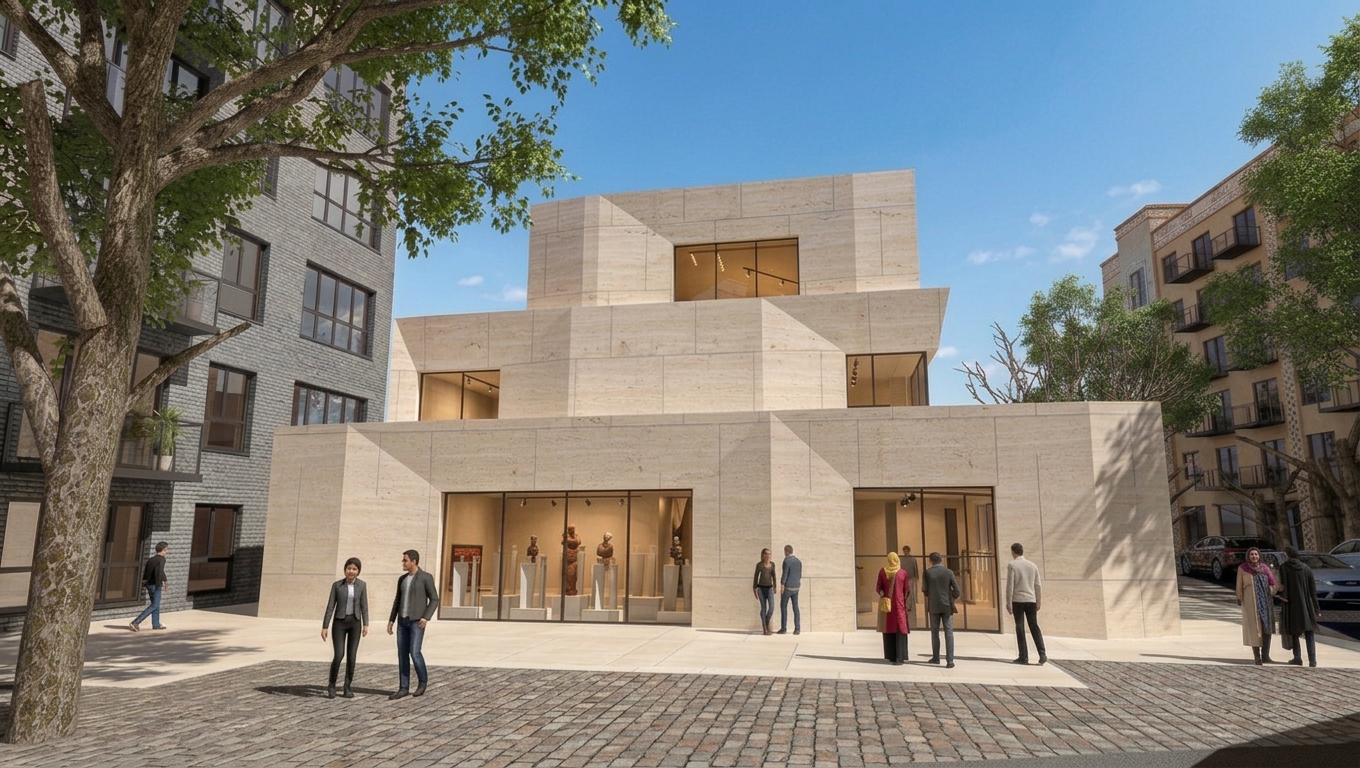
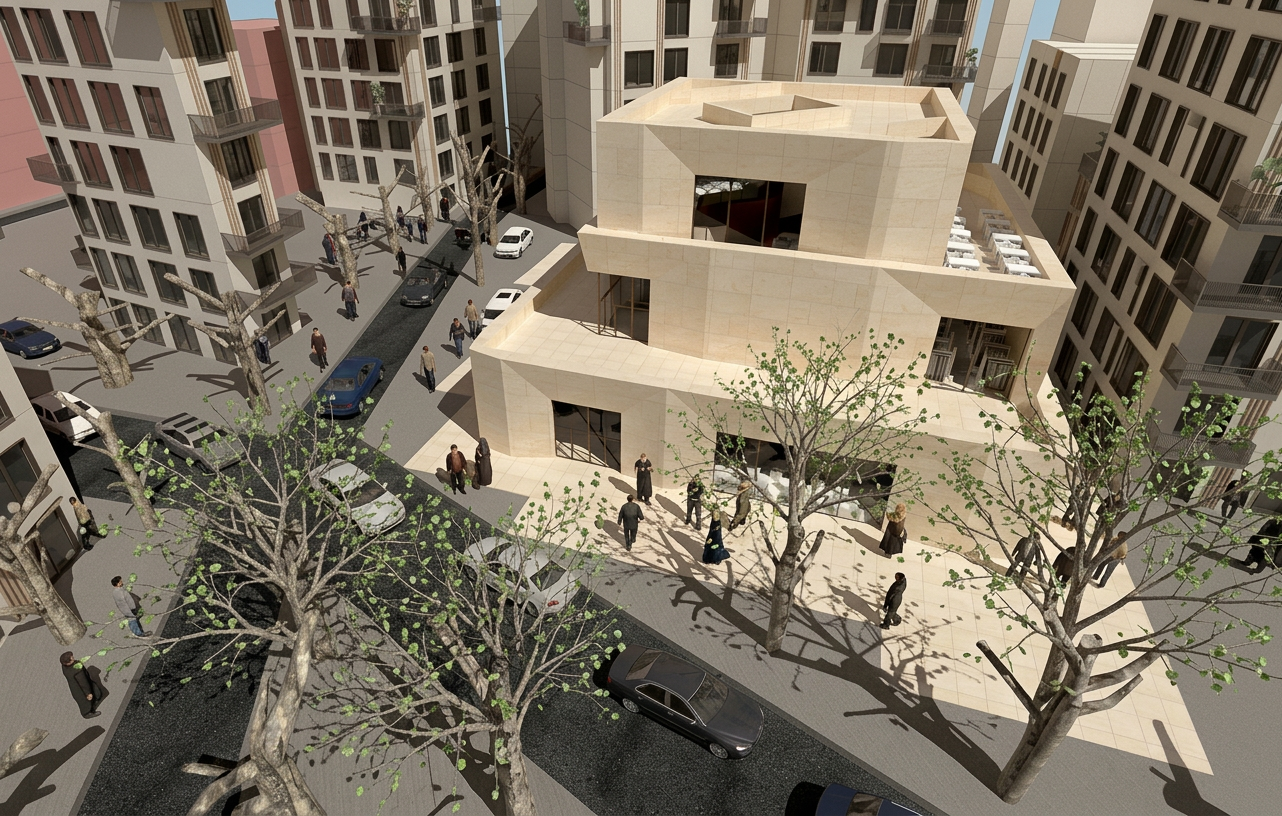
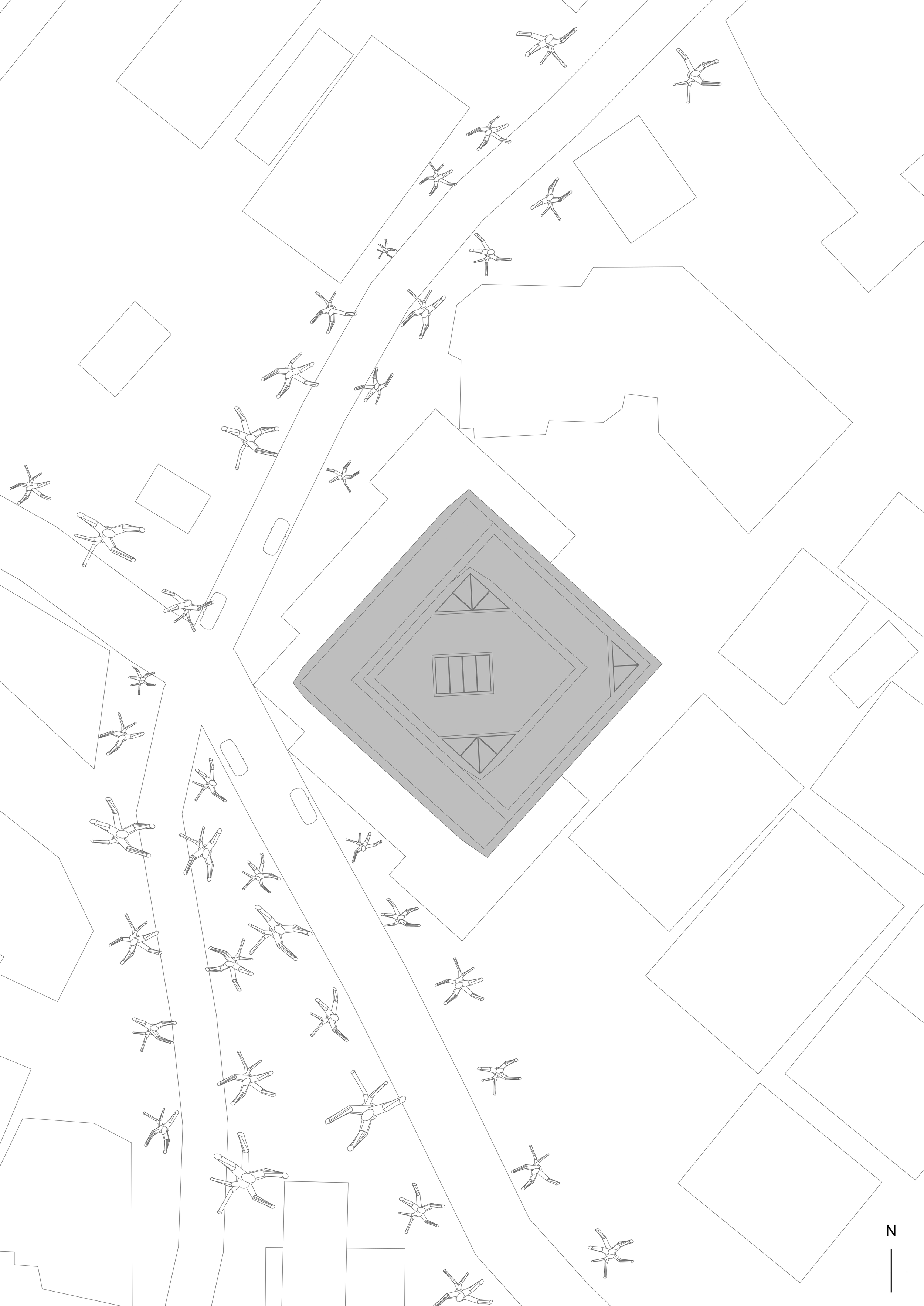
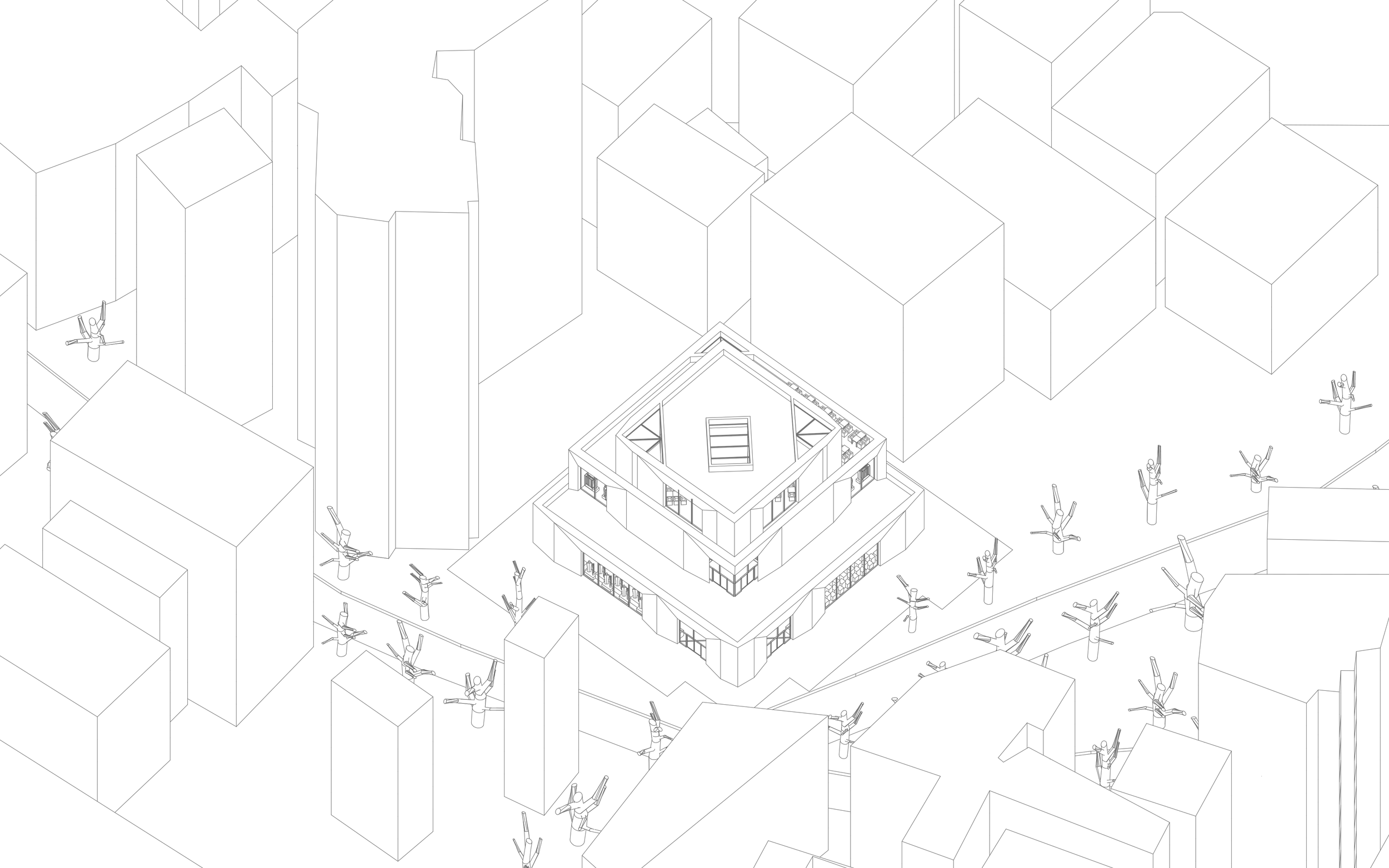
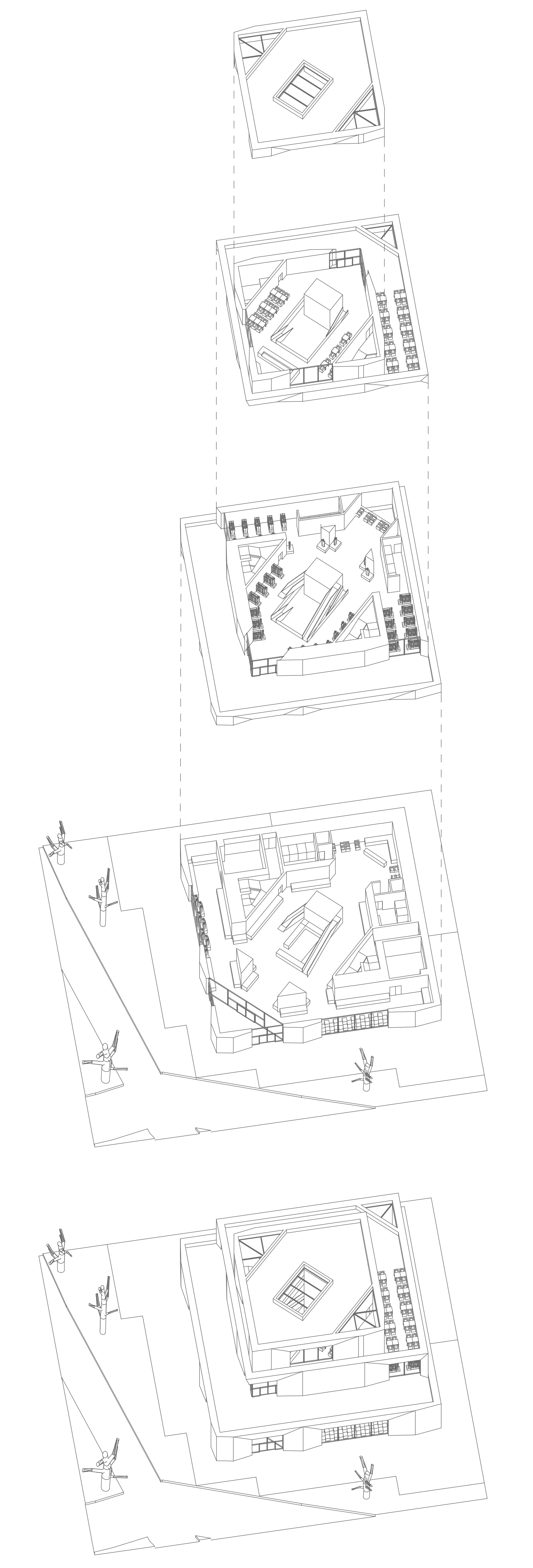
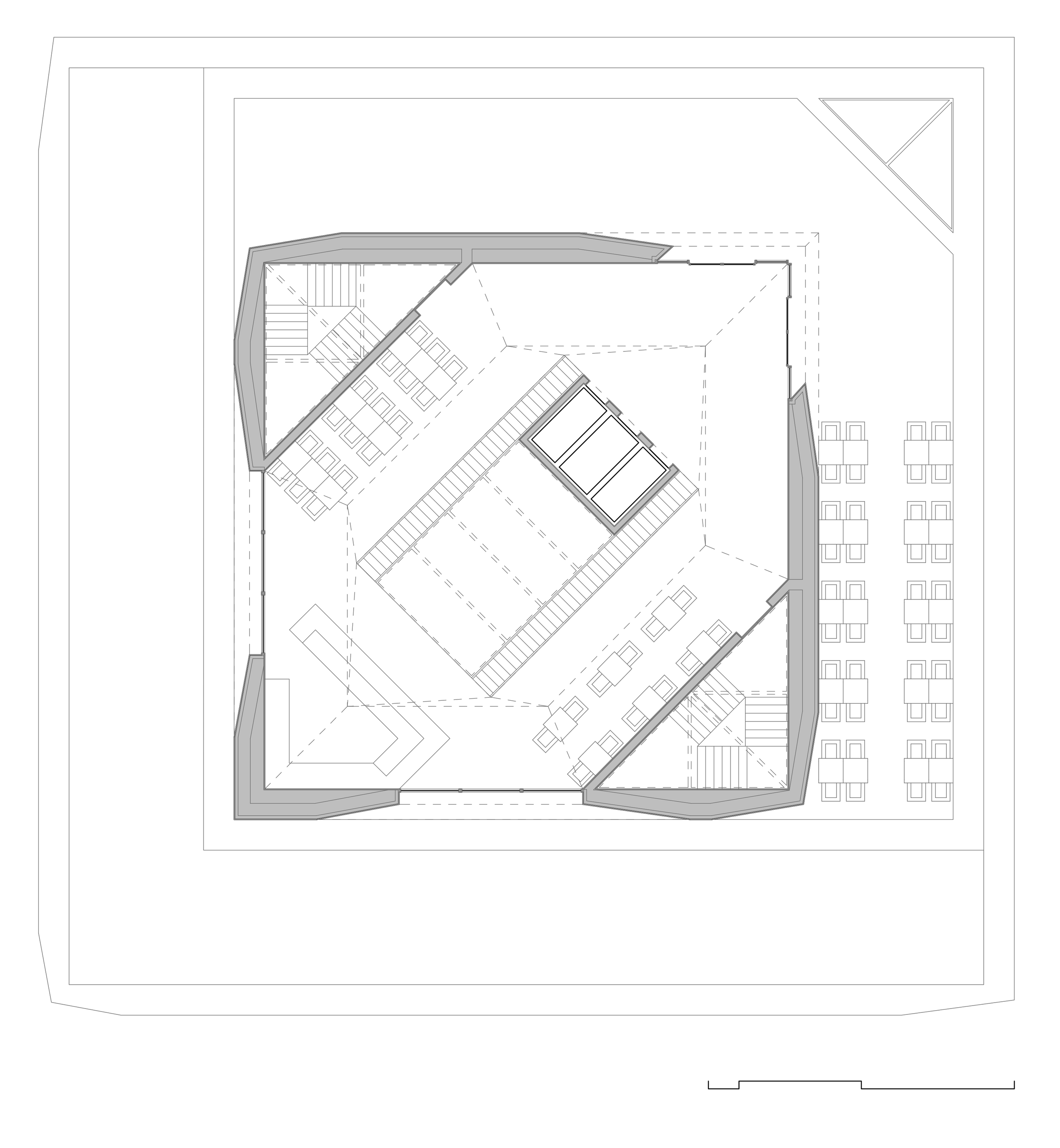
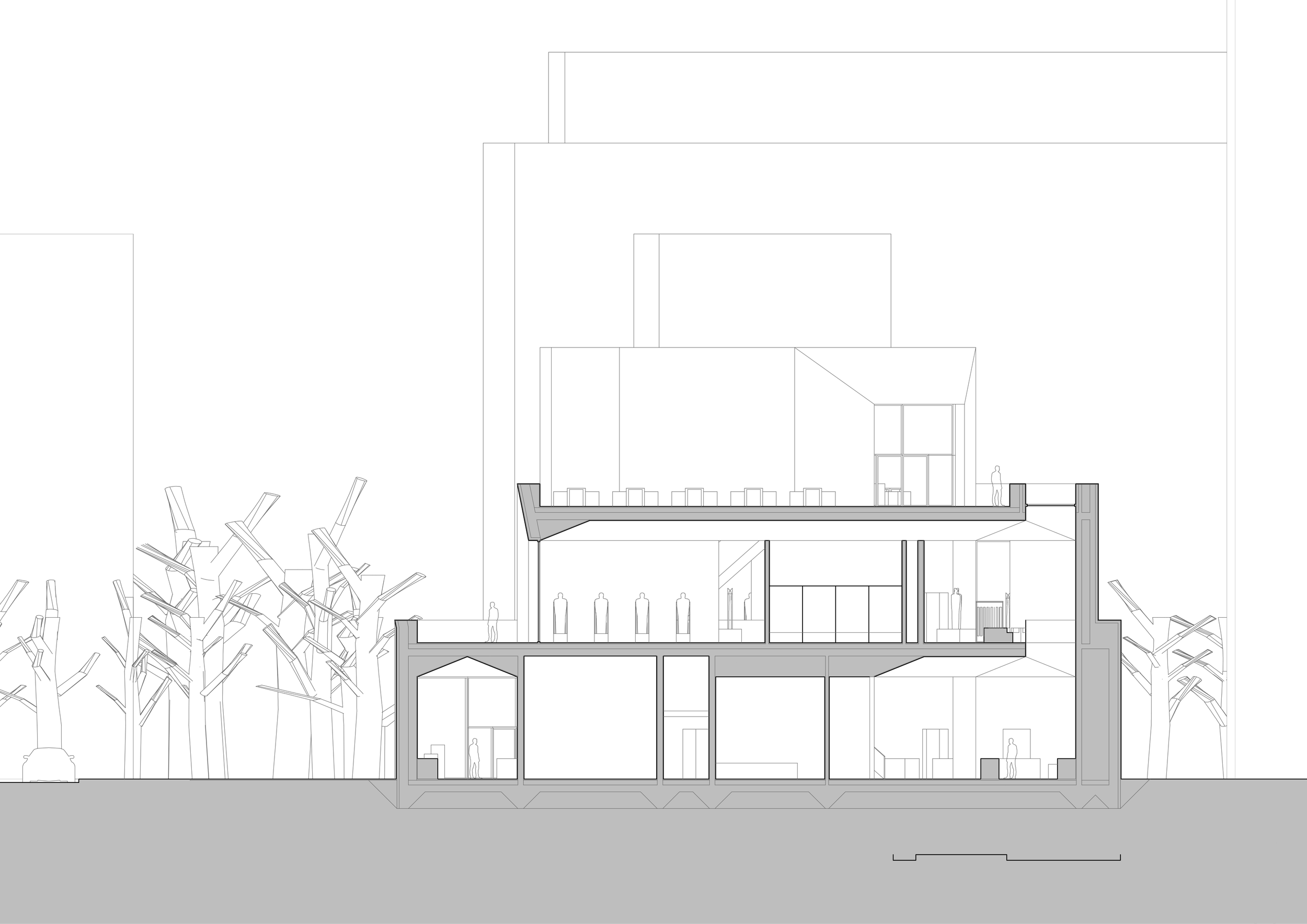
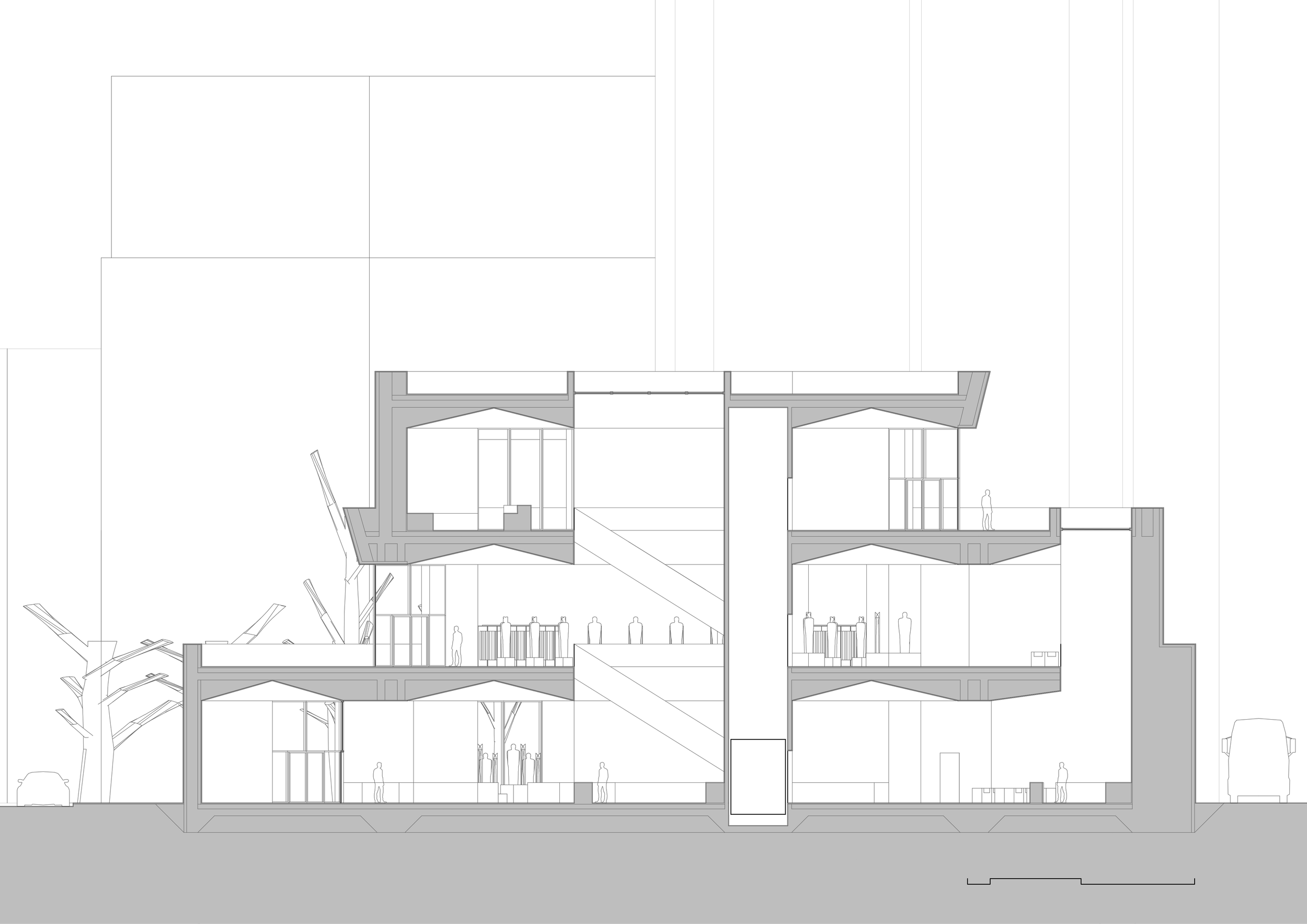
Situated along Tehran’s prestigious Fereshteh Street, this three-story luxury boutique redefines the contemporary retail experience through a synthesis of ancient typology and modern spatial design. Conceptually rooted in the Sumerian Ziggurat, the building’s massing features a tiered reduction in footprint as it ascends. However, rather than adhering to a rigid concentric step-back, the volumes are offset and non-centered, creating dynamic exterior terraces and a sculptural presence on the street corner. Grounding these shifting forms is a monolithic vertical circulation core that punches through the center of the structure, serving as the spatial and structural anchor for all three levels.
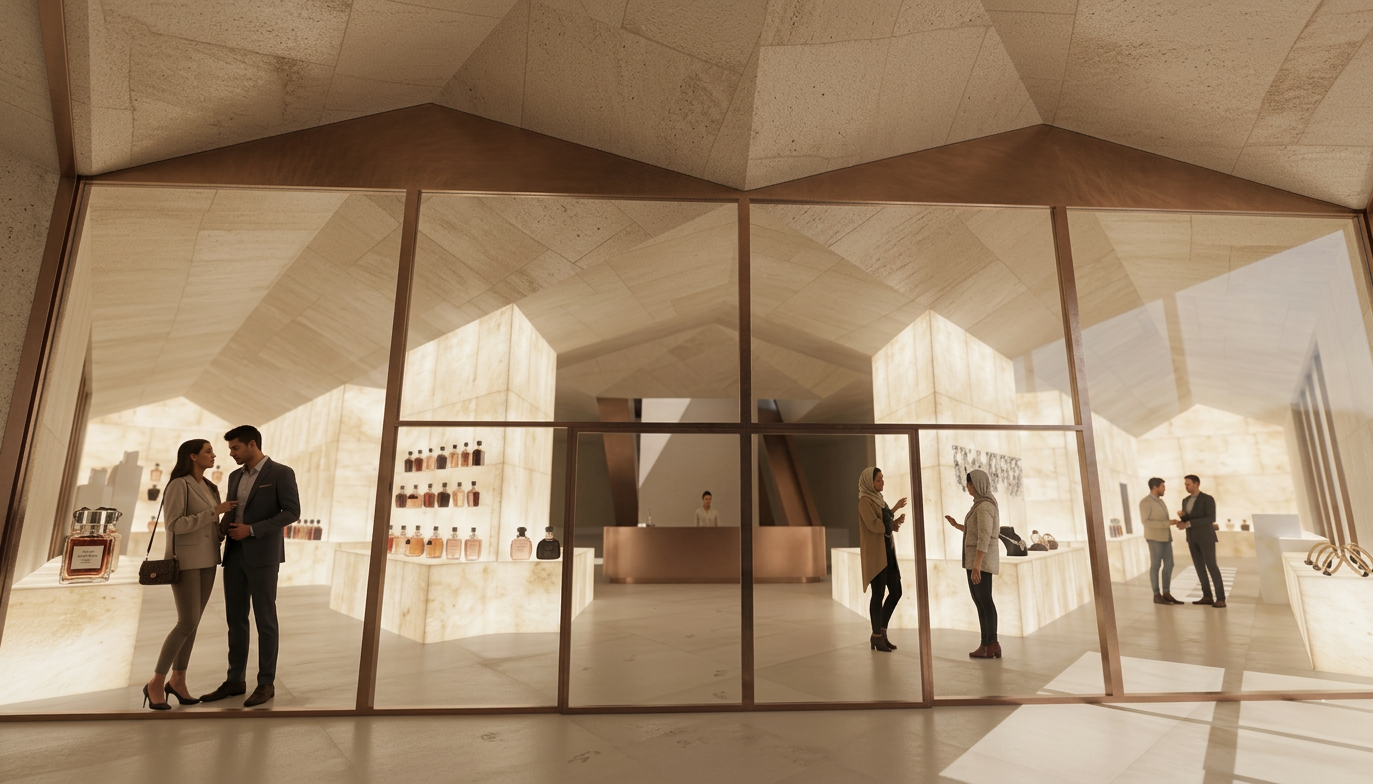
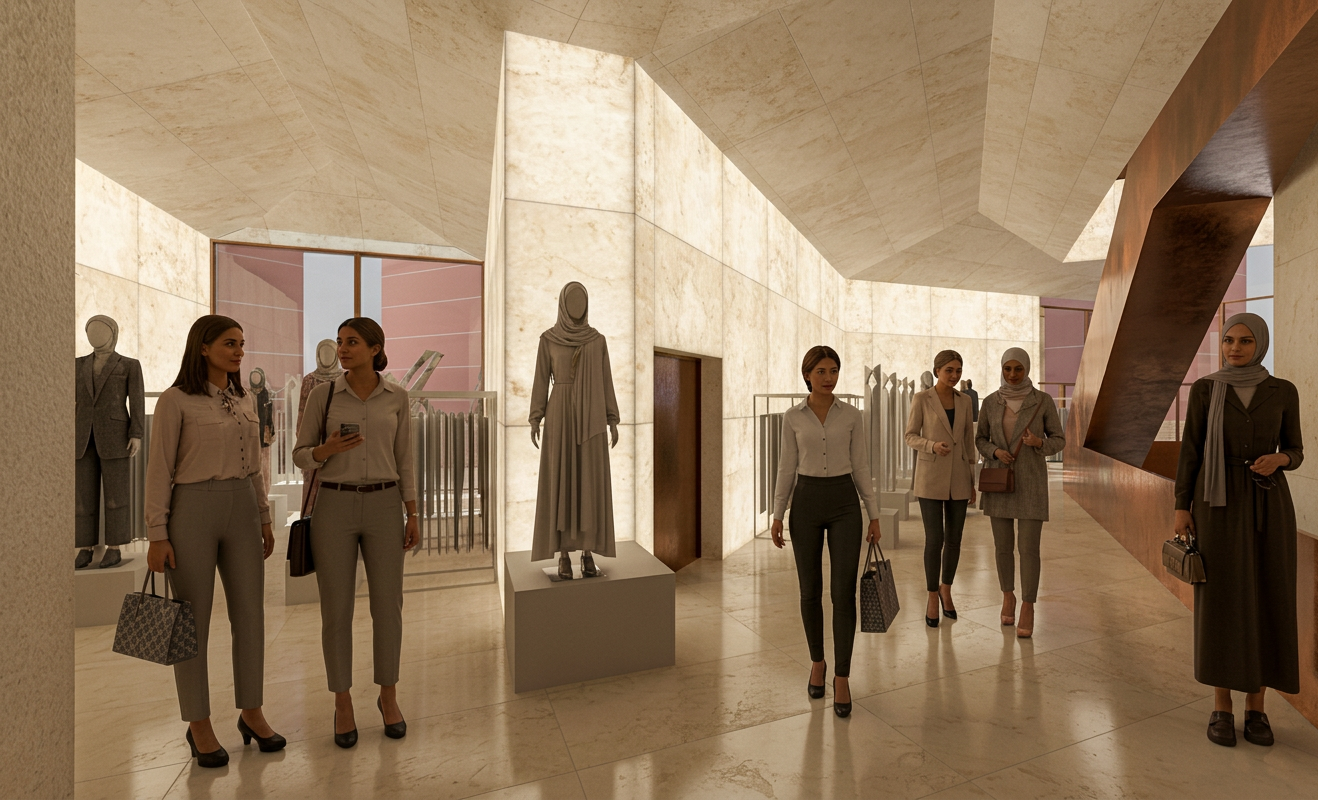
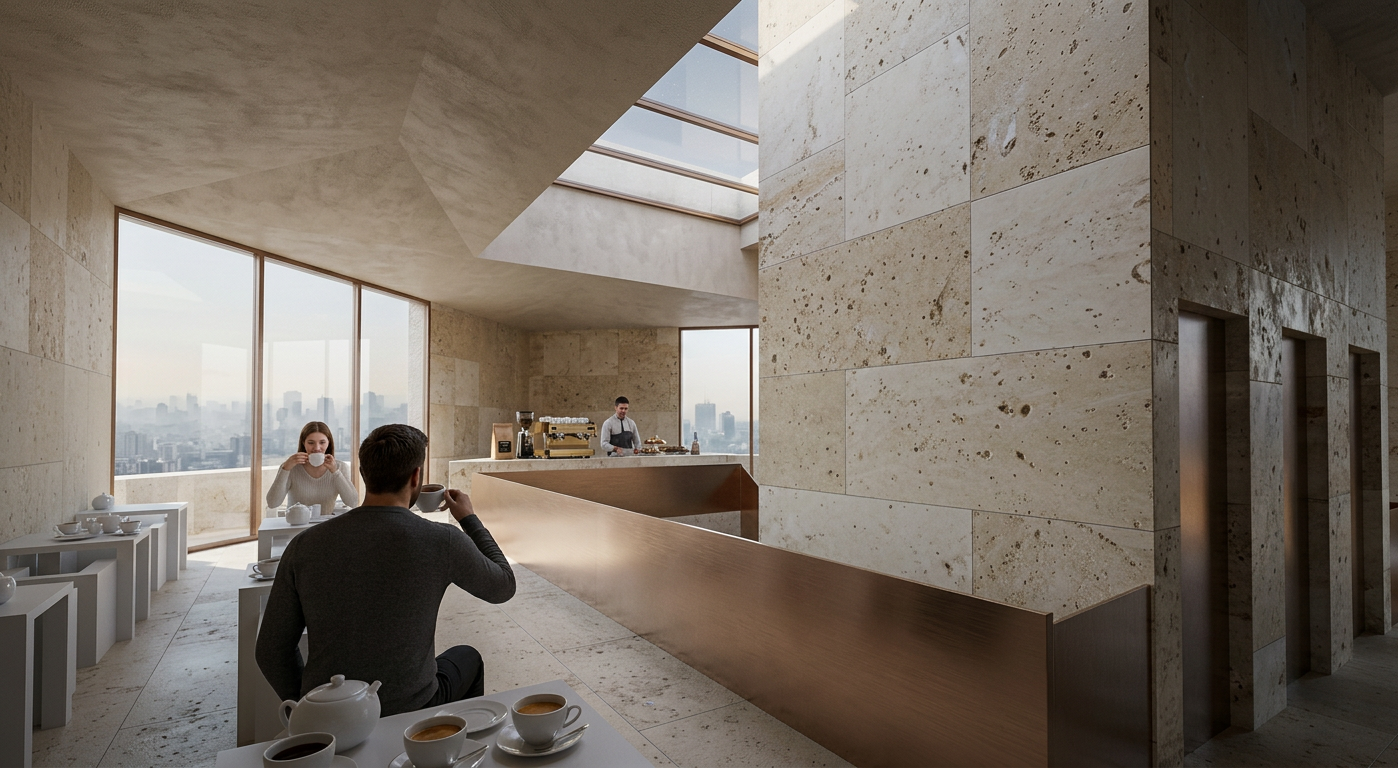
The project’s defining architectural feature is its absolute dedication to limestone, accented by sharp, bronze-toned metal detailing. While the exterior presents a solid, panelized façade, the interior inverts the stone’s heavy nature. The interior walls are clad in ultra-thin, translucent limestone panels. Backlit by integrated LED systems, these walls dissolve the boundary between matter and light, evoking the surreal atmosphere of a sacred temple. This ethereal glow is framed above by a dramatic, faceted stone ceiling—a geometric topography that mirrors the exterior massing inverted inwards—elevating the shopping experience into a sensory ritual.
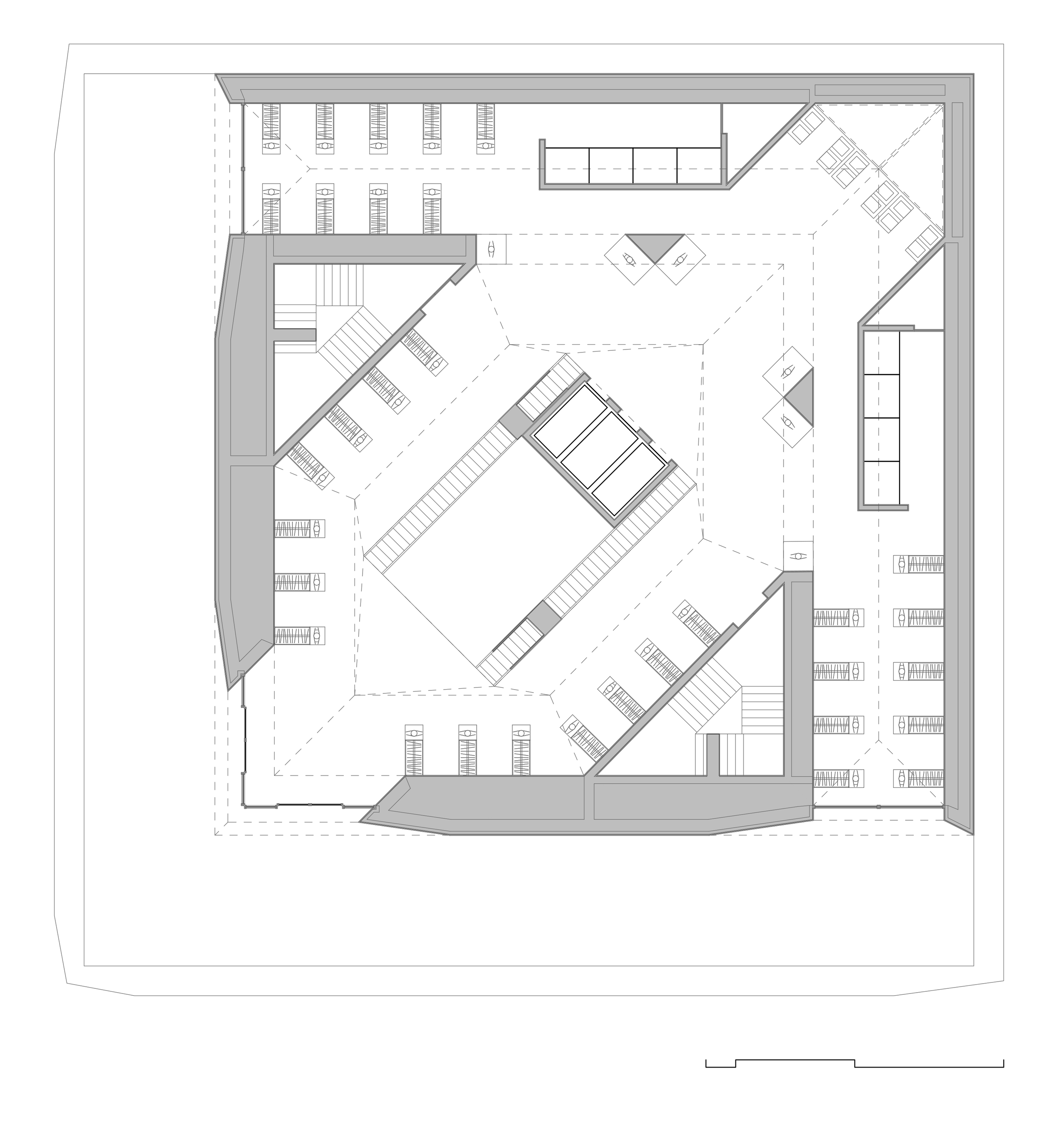
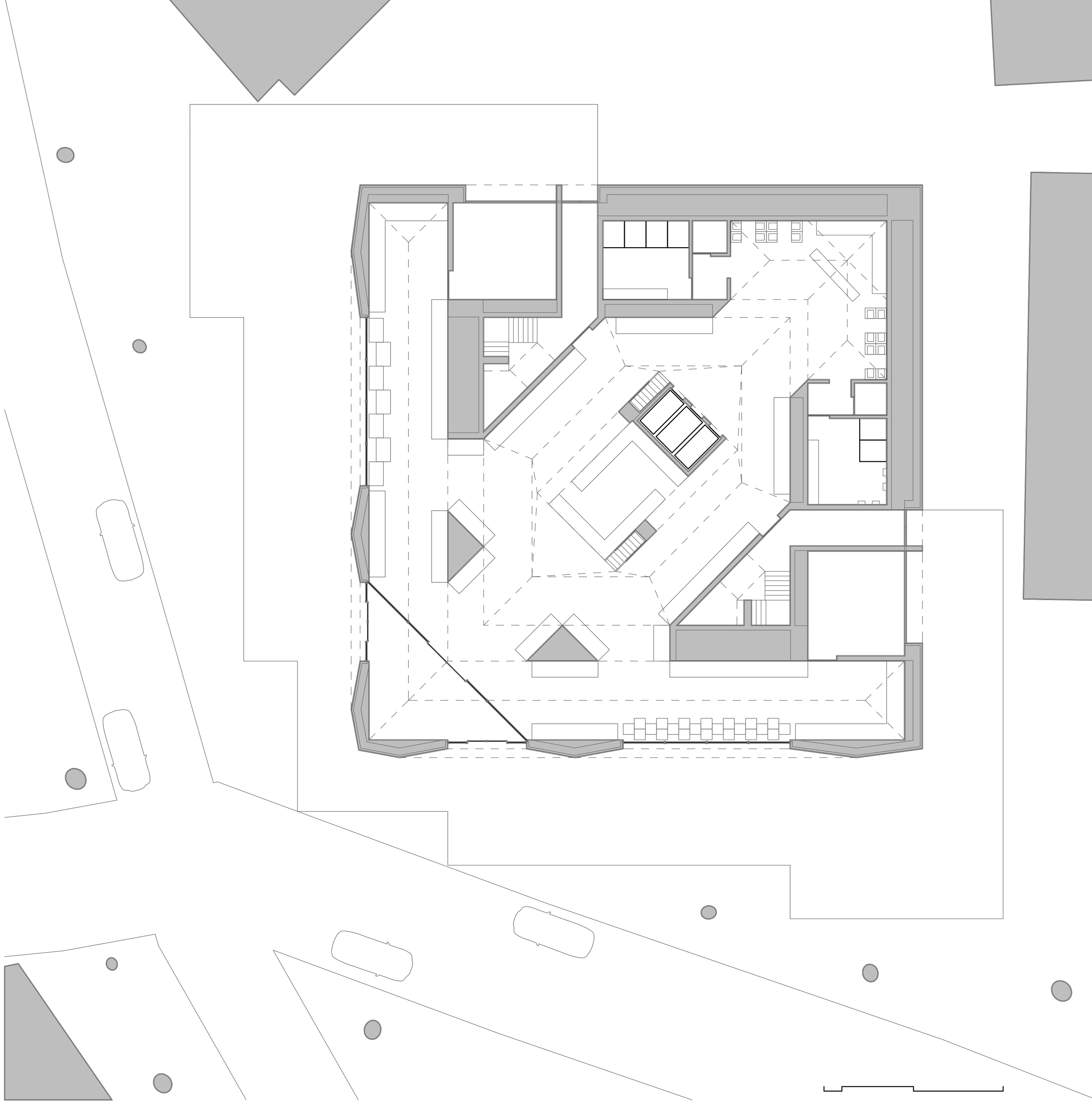
Functionally, the interior floorplans are governed by a rigorous symmetry. This geometric order elegantly resolves the programmatic need for distinct male and female zones, allowing for duplicated, mirrored spaces for product displays, dressing cabins, and washrooms. The vertical program transitions from high-energy retail to serene hospitality. The ground level anchors the experience with luxury perfumes and jewelry, glowing beneath the geometric ceiling. The middle level is dedicated to high-end clothing, connecting to an outdoor terrace. The journey culminates on the top floor, where the footprint is smallest, transforming into an exclusive coffee and tea lounge. Here, beneath large skylights, the space opens to views of Fereshteh Street, offering a final space of contemplation.
Research
Social Aspects: This project reconsiders the typology of luxury retail in Tehran by shifting the focus from transaction to ritual. By evoking the atmosphere of a sacred temple, the design encourages customers to engage with the space mindfully. The program acknowledges local cultural requirements through a rigorous symmetry in the floor plan; this allows for distinct, equally spacious zones for male and female sections without compromising architectural unity. The top-level tea shop acts as a social condenser, transitioning the building from a place of commerce to a place of community and leisure. Keywords: cultural sensitivity, retail phenomenology, experiential luxury, communal urban space.
Aesthetic Aspects: The architectural language is a contemporary reinterpretation of the Sumerian Ziggurat. The massing involves shifting, non-centered volumes that reduce the building's footprint as it ascends. The aesthetic core is the manipulation of light and geometry; the opaque exterior limestone contrasts with the translucent, backlit interior panels that create a "surreal" glowing vessel. This is capped by a faceted, crystalline ceiling that adds a sculptural depth to the interior volume. Bronze-finished metal elements (staircases and window frames) provide a warm, sharp contrast to the pale stone, grounding the ethereal light. Keywords: Neo-Ziggurat typology, translucent stone, faceted ceiling geometry, bronze accents.
Material Aspects: The project demonstrates a monolithic dedication to limestone, explored in two distinct behaviors, paired with metal accents. The exterior utilizes thick, honed limestone panels for durability. The interior utilizes ultra-thin sliced limestone reinforced with glass, allowing it to transmit light and reveal natural sedimentation. Oxidized copper or bronze elements are used for the structural staircases and joinery, selected for their ability to age gracefully alongside the stone. The glazing is highly transparent to blur the line between the street and the glowing interior. Keywords: lithic translucency, monolithic cladding, metallic contrast, material duality.
Engineering and Construction Aspects: The structural integrity relies on the central vertical core, which anchors the cantilevered floor plates. The engineering challenge lies in the complex geometry of the faceted ceiling and the facade attachment systems for the translucent walls, which require specialized substructures to house LED matrices. Given Tehran’s seismic activity, the offset volumes require rigorous shear wall reinforcement within the stone-clad core to resist lateral loads. The skylights on the upper level require reinforced glazing to manage thermal gain while admitting natural light. Keywords: central core stability, geometric structural integration, seismic shear resistance, cantilevered loads.
Urban Aspects: Situated on the dense Fereshteh Street, the building acts as an urban pause point. Unlike neighboring vertical towers, the stepped-back terraces reduce the visual mass at the street level, allowing light and air to reach the pedestrian realm. The building respects the street hierarchy, presenting a solid, protective face to the traffic while opening up internally. The terraces and large glass storefronts create a visual dialogue with the sidewalk, inviting pedestrians into the "glowing cave." Keywords: urban porosity, streetscape integration, Fereshteh distinctiveness, vertical setbacks.
Environmental Aspects: The heavy limestone exterior serves as a high-performance thermal mass, buffering the interior against Tehran’s temperature fluctuations. The reduced footprint on upper levels decreases roof heat gain. The interior lighting design relies on low-energy LED technology behind the stone, reducing the need for overhead fixtures. Operable skylights on the top level allow for stack-effect ventilation, drawing warm air out of the building naturally. The terraces offer opportunities for vegetation to mitigate the micro-urban heat island effect. Keywords: thermal mass buffering, energy-efficient illumination, natural ventilation, stack effect.
Economic Aspects: The project targets the high-end "experience economy," where architectural atmosphere correlates to brand value. By creating a landmark destination, the building commands premium value for tenants. While the custom stone cutting for the faceted ceilings and translucent walls represents a higher initial capital expenditure, the durability of limestone and bronze ensures low exterior maintenance costs. The symmetry of the plan allows for flexible leasing strategies, enabling spaces to be divided or unified based on tenant needs. Keywords: brand positioning, destination architecture, durable asset, high-value retail.